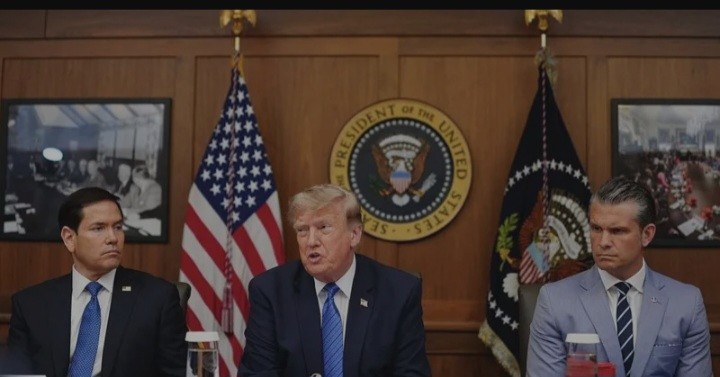
The White House has dismissed reports that US Defence Secretary Pete Hegseth and Secretary of State Marco Rubio could leave their positions following the Republican Party's heavy losses in the midterm elections.
Speculation over possible changes within President Donald Trump's administration emerged after Democrats secured control of both the House of Representatives and the Senate, raising questions about the president's leadership and his administration's handling of the war in Iran.
Hegseth has faced growing criticism over his management of the conflict, which Trump and Vice-President JD Vance have identified as a major factor behind the Republicans' poor electoral performance.
However, the White House has maintained that there are no immediate plans to remove the defence secretary, with Trump publicly praising his performance.
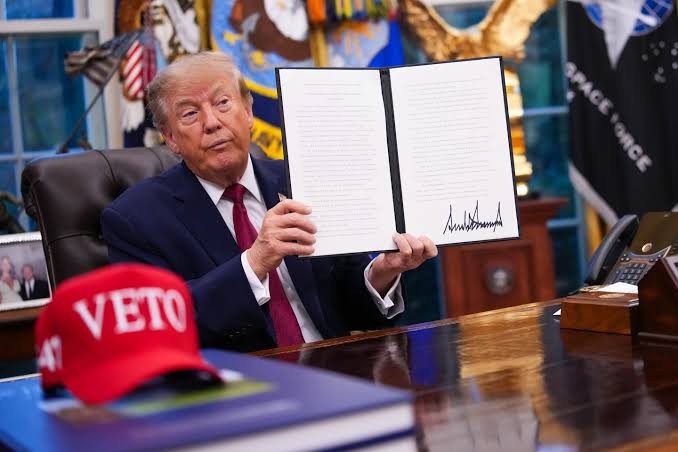
In a telephone interview with ABC News, Trump acknowledged receiving calls about Hegseth but said he had every intention of keeping him in the administration.
Speaking to reporters at the White House on Thursday, the president described Hegseth as having done a “fantastic job” and listed what he considered some of the department's achievements under his leadership.
Trump cited the January arrest of Venezuelan leader Nicolás Maduro and the ongoing war in Iran among the administration's accomplishments.
Hegseth, meanwhile, has defended his record amid growing calls for his removal.
In a video statement, he criticised efforts by Republican Representative Thomas Massie to initiate impeachment proceedings against him, describing the proposed action as a politically motivated attempt to undermine his leadership.
Massie, a frequent critic of Trump, has vowed to introduce a resolution seeking Hegseth's impeachment as early as next week.
He told Politico that he intended to proceed with the effort and later urged Trump on X to replace the defence secretary before Democrats take control of Congress in January.
Massie argued that making changes before the new Congress is sworn in would give the administration a better opportunity to secure Senate confirmation for replacements.
Hegseth also used his video address to defend the department's record, citing efforts to increase military recruitment, rebuild the defence industrial base and remove diversity programmes as part of Trump's America First agenda.
Separately, reports have suggested that Hegseth could be considering a political future, including a possible run for an open Senate seat in Tennessee.
While Hegseth's position remains under scrutiny, Rubio has dismissed speculation that he is considering leaving the State Department ahead of a possible 2028 presidential campaign.
In an interview with The New York Times, Rubio said serving in Trump's administration until the end of the president's term had always been his plan.
The White House and State Department also rejected claims that Rubio was preparing to leave office, describing the reports as “fake news”.
The Washington Post, meanwhile, reported that Trump could be considering changes involving General Dan Caine, chairman of the Joint Chiefs of Staff, or Admiral Brad Cooper, head of US Central Command. Both military leaders have played significant roles in advising the administration on the Iran war.
The conflict has become a major point of political disagreement within the Republican Party following the election losses.
Trump and Vance have both blamed the war for the party's poor performance, with Vance arguing that Republicans must address the conflict and other domestic concerns to regain public support.
The election outcome has intensified pressure on the administration as it prepares to work with a Congress controlled by Democrats from January.