US President Donald Trump has signed an executive order seeking to prevent future presidents from substantially altering or demolishing the White House Oval Office by designating the historic space a national monument.
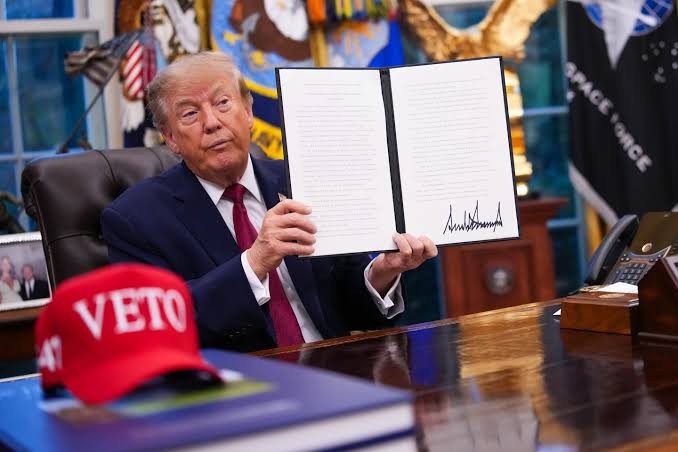
Trump signed the order on Thursday, October 5, declaring the Oval Office and some of its surrounding rooms a national monument, with the National Park Service directed to oversee their preservation.
Trump said the designation would protect the presidential workspace from being destroyed or redesigned by future administrations.
"We're making it a national monument and it will not be allowed to be touched by anybody, destroyed, ripped down by stupid people, in order to build something in a slightly different shape," Trump said.
The order requires the designated spaces to be maintained in a manner that protects their historic character, architectural integrity and association with the American presidency.
However, it does not completely prevent future presidents from making changes. The document preserves presidential authority to redecorate the rooms, select furnishings and undertake ordinary operational and security modifications, provided they do not substantially impair the monument's historic structure or architectural character.
Trump said the Oval Office had previously been in poor condition, citing broken windows, cracked walls and damaged stonework. He also said world leaders who had visited the White House in recent months had complimented his decorative changes.
The president has significantly transformed the appearance of the office during his second term, introducing numerous gold features, including decorative ornaments, gold-framed paintings, mirrors and a large gold plaque bearing the words "Oval Office" outside the room.
Other changes to the White House grounds have included paving over the Rose Garden and adding a new helicopter pad.
The latest designation comes months after Trump oversaw the demolition of the entire White House East Wing to make way for a new ballroom. The construction project has faced legal challenges, although it also received approval from Congress.
Despite the new protections, the White House is already designated a National Historic Landmark. However, existing legal exemptions under the National Historic Preservation Act allow presidents to undertake certain changes to the building, while major construction projects require congressional permission.
Greg Werkheiser, a lawyer at Cultural Heritage Partners, a firm specialising in historic preservation, said presidents generally have discretion over temporary alterations such as furniture and decorations, provided permanent art and architectural features are not damaged.
He questioned the administration's commitment to historic preservation, pointing to other projects pursued by Trump in Washington, including renovations at the Kennedy Center and plans to construct a triumphal arch.
Werkheiser described the president's position as hypocritical, arguing that his administration was pursuing projects that could undermine the same preservation protections he was invoking for the Oval Office.
The order also follows Trump's earlier remarks about potentially demolishing the Oval Office over security concerns raised by the US Secret Service. In an October interview with Time magazine, he suggested the office might need to be torn down, although he said he had resisted the idea because of its historical significance.
The Oval Office has existed in its current form since the early 1930s, following its redesign during the administration of President Franklin D. Roosevelt.
Trump's changes have also attracted political criticism. During the midterm election campaign, former US President Barack Obama mocked the gold decorations, saying they had left the White House looking like "Saddam Hussein opened a Cheesecake Factory".
Trump has defended his renovations, describing the Oval Office as a symbol of American history and national identity, and said the new designation would make it impossible for future administrations to destroy the historic space.