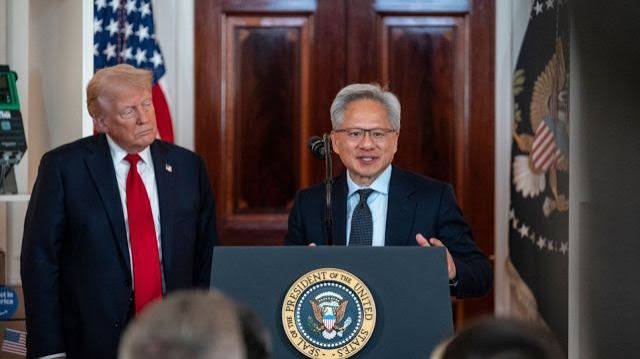
US President Donald Trump has confirmed that the Federal Bureau of Investigation (FBI) is looking into Nvidia chief executive Jensen Huang's relationship with a woman suspected of working for Chinese intelligence, escalating a controversy surrounding one of America's most influential technology executives.
Trump said he had spoken directly with Huang on Monday, November 9, and asked whether he knew that the woman, identified as Alice Huang, was allegedly a Chinese intelligence operative.
According to Trump, the Nvidia founder denied having any knowledge of her alleged intelligence activities.
“He said he had absolutely no idea that the person in question was a spy,” Trump told reporters at the White House, adding that he believed Huang and expected him to emerge from the controversy in good shape.
The president confirmed the FBI was examining the matter but did not disclose the scope of the investigation, the specific allegations being investigated or whether Huang was personally under investigation.
The controversy follows reports saying that US intelligence officials believed Alice Huang had been gathering information for Beijing. She is a former executive at Singapore-based data centre company Megaspeed International and is not related to the Nvidia chief executive.
The reports also raised questions about Megaspeed's business dealings and allegations involving the movement of advanced Nvidia chips into China.
Huang has acknowledged having an extramarital relationship with a business executive, apologising to his wife, family and colleagues. He has not publicly identified the woman in his statement.
Nvidia's board has separately launched an independent investigation into whether its chief executive was targeted by a foreign intelligence operation.
The company said it had no reason to believe its trade secrets or US national security had been compromised, but appointed independent legal counsel to examine the available information.
Huang has pledged to cooperate fully with the investigation and reaffirmed his commitment to protecting Nvidia and supporting American national security.
China has rejected the espionage allegations, with its Foreign Ministry describing them as unsubstantiated claims intended to smear Beijing.
The controversy has attracted attention in Washington because Nvidia sits at the centre of the global artificial intelligence industry and the technology competition between the United States and China.
Its advanced processors are essential to developing and operating AI systems, making the company strategically important to US efforts to maintain an advantage over China.
The allegations have also triggered concerns among investors. Nvidia shares fell 4.3 per cent on Monday, wiping approximately $190 billion from its market value, according to Reuters.
The company is now facing pressure on two fronts: the board's internal review and questions from US lawmakers about its security safeguards and interactions with individuals suspected of links to foreign intelligence.
A proposed shareholder class-action lawsuit has also been filed against Nvidia and Huang, accusing them of concealing information about the alleged relationship and related national security concerns. The allegations in the lawsuit have not been established in court.
Trump's comments add a new dimension to the controversy, although the president did not indicate whether the FBI's work would affect Huang's position at Nvidia or the company's operations.