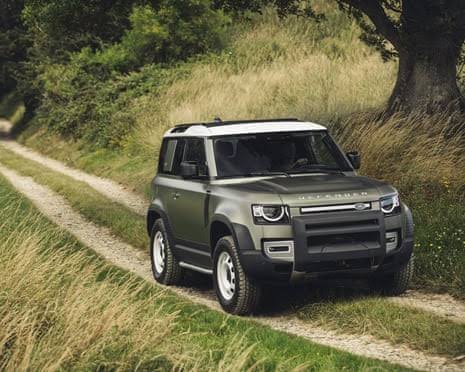
Jaguar Land Rover (JLR) has launched an intellectual property dispute against Chinese electric vehicle manufacturer BYD, accusing it of copying elements of its iconic Land Rover Defender in the development of a new sport utility vehicle.
The dispute escalated after court-appointed bailiffs acting on behalf of JLR searched two BYD offices in the Netherlands in August 2026, seizing digital records and other documents that could support the British automaker's case.
The searches took place at BYD premises in Schiedam and Hoofddorp, ahead of legal proceedings at a court in The Hague. The operation was authorised by a Dutch court and was not a police investigation.
At the centre of the dispute is BYD's Ti7, a large, boxy SUV that has attracted comparisons with the Land Rover Defender because of its exterior styling.
However, JLR's concerns reportedly go beyond similarities in appearance. The company suspects BYD may have dismantled a Defender and reverse-engineered elements of its underlying technology during the Ti7's development.
JLR sought access to records relating to the vehicle's development, arguing that the material could provide evidence of possible intellectual property infringement.
BYD has challenged the scope of the evidence-gathering exercise, with its legal representatives reportedly arguing that the seizure was excessive and amounted to a fishing expedition into the company's confidential business information.
Both companies have declined to comment publicly on the ongoing proceedings.
The case comes as Chinese vehicle manufacturers expand aggressively into European markets, increasing competition for established brands through competitively priced electric and hybrid models.
The commercial stakes are significant. BYD plans to introduce the seven-seat Ti7 in the United Kingdom in January 2027, with prices starting at £47,995. This is more than £20,000 below the starting price of the seven-seat Land Rover Defender 110, placing the two vehicles in direct competition for some buyers.
For JLR, protecting the Defender's distinctive identity and underlying technology is important as the company faces growing competition in the premium SUV market.
The company has previously pursued a successful design infringement case in China. In 2019, it won a legal dispute against Jiangling Motor Corporation over the Landwind X7, which was found to have copied distinctive design features of the Range Rover Evoque.
The latest dispute could have wider implications for Chinese automakers seeking to expand in Europe, where intellectual property protection remains a major consideration for international manufacturers.
The proceedings will determine whether JLR has sufficient grounds to pursue its allegations against BYD. Until a court establishes infringement, the claims remain allegations rather than proven wrongdoing.