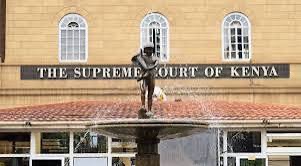
The Supreme Court of Kenya on November 2, 2026, admitted an appeal by the Attorney-General challenging a Sh17.3 billion compensation award to Nguruman Limited over the invasion and destruction of its ranch in Narok County, opening a new legal battle over the government's responsibility to protect private property.
A five-judge bench led by Chief Justice Martha Koome ruled that the appeal falls within the court's constitutional jurisdiction under Article 163(4)(a). The judges determined that the case raises questions about the interpretation and application of Article 40, which guarantees the right to property under the Constitution.
The dispute dates back to 1991, when armed members of the neighbouring Shompole Group Ranch allegedly invaded Nguruman Limited's property, causing extensive damage and displacing the company's employees. The investor said repeated requests for police intervention and court orders to stop the occupation were not enforced.
Nguruman Limited is the registered proprietor of land identified as LR No. Narok/Nguruman/Kamorora/1, measuring approximately 66,700 acres. The property is located in the Nguruman area near Lake Magadi and borders two neighbouring group ranches.
The Court of Appeal ruled in March 2025 that the government was liable for failing to protect the investor's property despite repeated requests for assistance. The judges found that the prolonged failure by police and other government agencies to enforce court orders amounted to a violation of the company's constitutional property rights.
The compensation award includes Sh16.7 billion for the land, Sh340 million for destroyed lodges and Sh162 million for damaged electricity, water supply systems and other installations. Additional compensation covers Sh61.1 million in lost assets and consumables, Sh11.2 million for stolen vehicles and Sh39.4 million for destroyed trees.
The Attorney-General challenged the award, arguing that the appeal raises constitutional questions concerning the extent of State responsibility in protecting property and the principles governing compensation for constitutional violations.
However, Martin Richard Steyn, representing the investor's interests, opposed the appeal, arguing that the Supreme Court lacked jurisdiction because the lower courts had relied on negligence rather than constitutional interpretation to establish government liability.
The Supreme Court's decision now allows the substantive appeal to proceed, leaving the Sh17.3 billion compensation dispute unresolved. The final determination will establish whether the lower courts' findings and the government's financial liability will stand.