By The News Booth Desk
Email: info.newsbooth@gmail.com
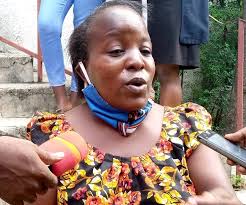
A lobby group advocating for the rights of the disabled community has called on the government to lend its support to an initiative aimed at providing reusable sanitary towels to girls. The initiative, spearheaded by Tunaweza Women with Disability, seeks to uphold and protect the rights of the girl child by ensuring access to essential hygiene products. Speaking to journalists in Mombasa on Monday, the group's Executive Director, Charity Chahasi, emphasized the importance of government backing to expand the reach and impact of the program.
Chahasi highlighted the success of the initiative, noting that over 8,000 reusable sanitary towels have already been distributed to girls across various counties, including Mombasa, Tana River, Migori, Nairobi, Eldoret, Kilifi, Busia, and Samburu. "The program has done so well," she stated, underscoring the positive reception and the tangible benefits it has brought to the communities served. The reusable sanitary towels, she explained, have a shelf life of over three years, are environmentally friendly, and are made from locally available materials, making them a sustainable solution for menstrual hygiene management.
In a related matter, Lucy Chesi, the Deputy Executive Director of the lobby, criticized the National Council for People with Disability (NCPWD) for its lack of transparency regarding the allocation of COVID-19 funds. Chesi urged the council to clarify how much of the pandemic relief funds were designated for the disabled community. "NCPWD as a state agency should tell us how much pandemic funds were allocated for the disabled persons throughout the country," she asserted, reflecting the group's demand for accountability and transparency.
Furthermore, Chesi expressed concerns over the exclusion of disabled youths from the government's Kazi Mtaani program, which was designed to provide employment opportunities for young people. She lamented that while the government acknowledges the presence of youths, it seems to overlook those who are disabled. "The government knows that we have youths in our midst, unfortunately, it does not know that there are also youths who are disabled," she remarked, calling for more inclusive policies that consider the needs of all young people, regardless of their physical abilities.
The workshop held at Bombolulu in Mombasa County served as a platform for these leaders to voice their concerns and advocate for greater support and inclusion of the disabled community in national programs and initiatives.