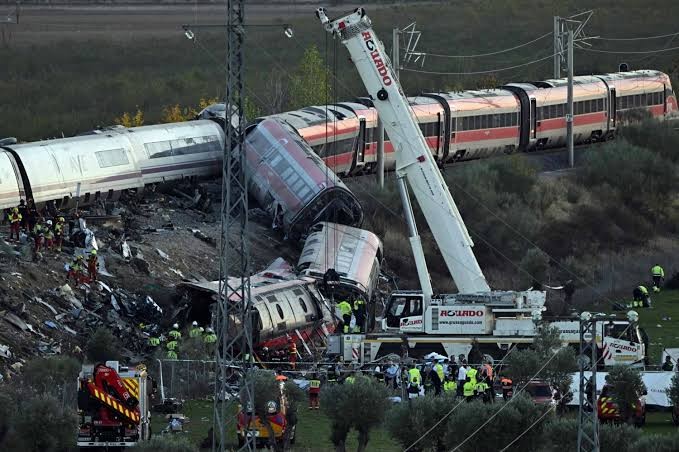
The death toll from a high-speed train collision in central Spain has risen to 68, with around 80 people injured, including 15 who were seriously hurt, as investigators examine possible failures in railway safety procedures.
The accident occurred on Wednesday, October 28, on the high-speed railway line near Urda, in Spain’s Toledo region, about 140 kilometres south of Madrid.
The collision involved a train operated by state-owned rail company Renfe and another operated by private company Iryo.
According to initial reports, the Renfe train struck the Iryo service, which had stopped on the tracks. The two trains were carrying a combined total of 544 people.
The Iryo train had 147 passengers, while the Renfe service was carrying 397.
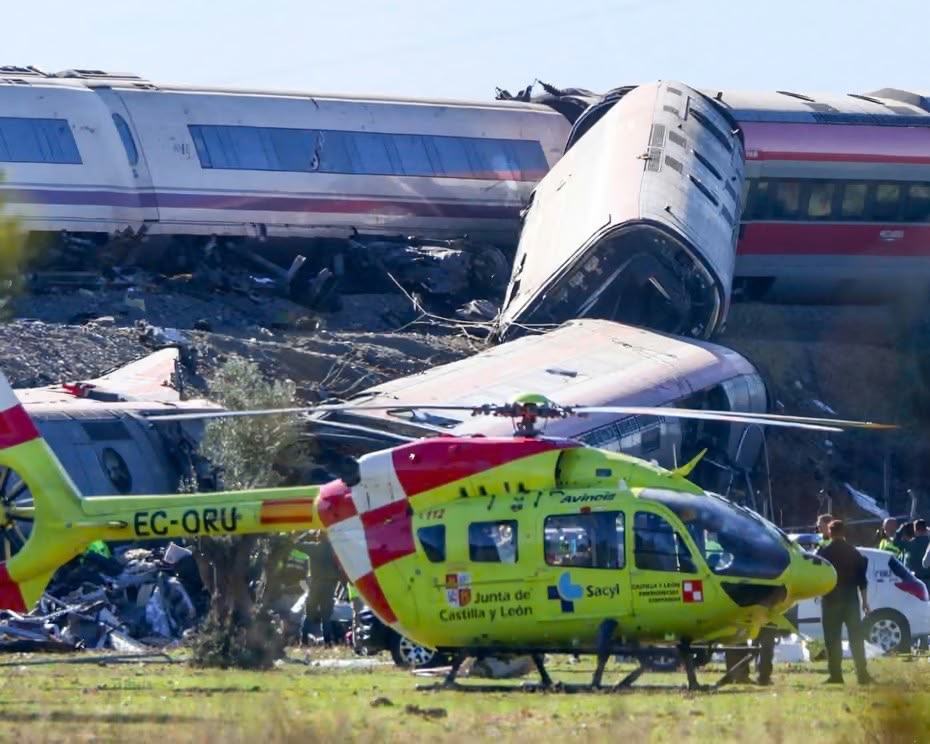
The impact caused several carriages to derail, with at least three plunging down an embankment.
Emergency crews, including rescue workers using sniffer dogs, searched the wreckage for victims as ambulances transported injured passengers to nearby hospitals.
Spain’s Transport Minister Óscar Puente said preliminary findings pointed to a computer communications failure affecting the railway’s LZB safety system.
The malfunction reportedly brought several trains to a halt, leaving traffic management under the control centre in Madrid.
Puente said the Renfe train was subsequently authorised to resume normal operations despite a red signal remaining active.
Investigators are examining why the instruction was issued and whether established safety procedures were followed.
The minister described the decision as inexplicable but said the investigation must establish the precise sequence of events.
The speed of the Renfe train at the time of the collision had not been established in the initial findings. Authorities were also investigating why the Iryo train remained stationary on the line.
Survivors described scenes of panic as passengers were thrown from their seats and struggled to escape damaged carriages. Some smashed windows to get out, while others remained trapped among seats and debris.
Passenger Rafael Barcelo told Reuters that travellers had been having breakfast when a powerful impact sent them flying.
Prime Minister Pedro Sánchez visited the crash area and pledged a thorough investigation into the disaster, saying the government would establish what happened and address any failures identified.
Spain also announced three days of national mourning for the victims.
The collision has renewed scrutiny of railway safety in Spain, which suffered another major train disaster in 2013 when 80 people died after a train derailed near Santiago de Compostela.
Investigators are continuing to examine the latest crash as families await information about victims and authorities work to determine the circumstances that led to the collision.