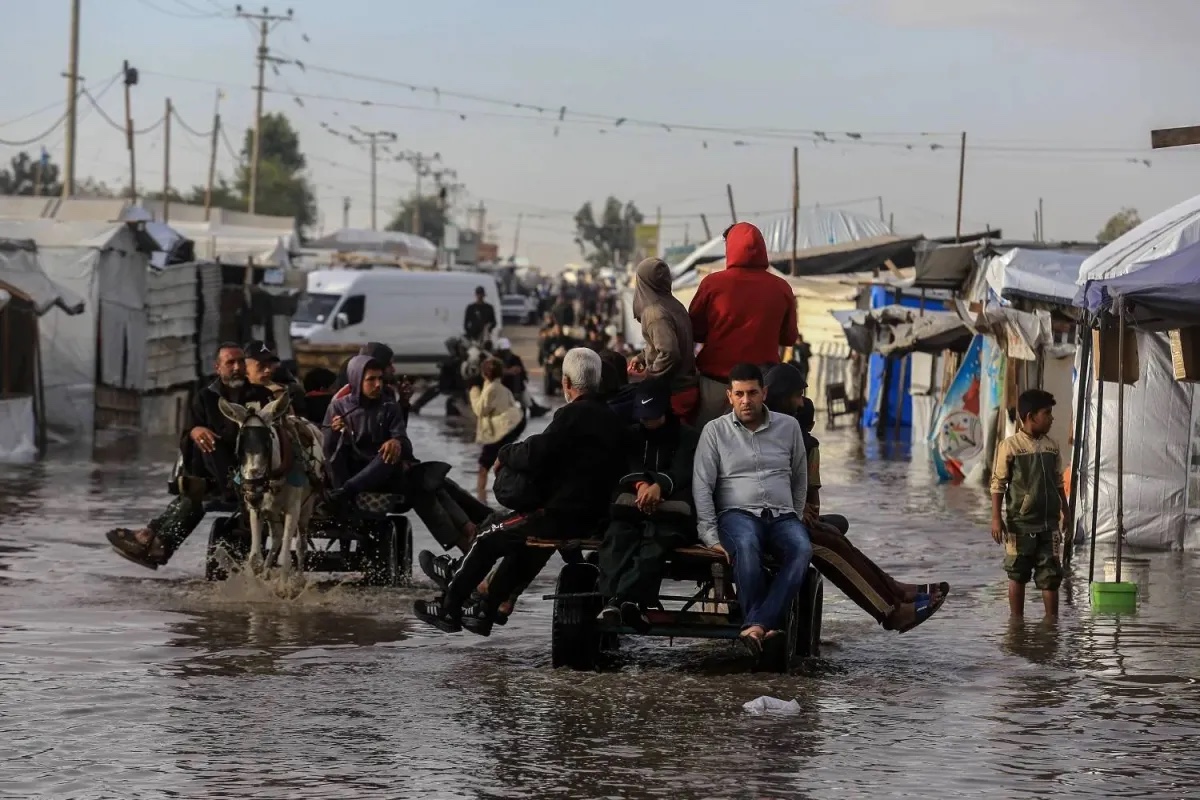
The United Nations and its humanitarian partners are delivering limited supplies to Gaza as nearly one million displaced Palestinians face flooding risks ahead of a fourth winter in damaged tents and makeshift shelters.
The United Nations Office for the Coordination of Humanitarian Affairs (OCHA) says 950,000 people are living in displacement sites exposed to medium-to-high flooding risks, including more than 400,000 facing high risks. Heavy rainfall could trigger further displacement as humanitarian organisations struggle with shortages of shelter materials and funding.
On Monday, October 26, UN teams brought food supplies, blankets, winter clothing, school items and fuel into the Gaza Strip.
However, transport operations were suspended on Tuesday following the closure of the Kerem Shalom crossing by Israeli authorities for election day, disrupting the movement of humanitarian supplies.
Despite access restrictions and funding shortfalls, aid agencies have continued supporting displaced families and children through food assistance, education supplies and winter preparations.
Over the past week, humanitarian partners distributed school bags to more than 8,000 children. During the preceding week, they supplied stationery to approximately 22,000 boys and girls and furnished about 300 classrooms serving an estimated 60,000 children.
However, the deliveries come as shelter needs continue to outstrip available supplies. An October 15 OCHA situation report estimated that 294,250 families required shelter assistance for the rainy season, but available supplies could provide partial assistance to only about 52,000 families, representing 18 per cent of those in need.
The International Organization for Migration (IOM) has also warned that almost two million people in Gaza require shelter and non-food assistance, with families facing another winter without adequate protection from rain, flooding and cold.
According to IOM, more than half of the tents and makeshift shelters assessed were in poor or very poor condition, leaving displaced households vulnerable as winter weather sets in. The agency has called for urgent access to shelter materials and additional funding to address the growing needs.
Humanitarian partners are attempting to reduce the risks before the rains intensify. The United Nations Development Programme said its teams were using recycled crushed concrete to raise and level shelter sites in preparation for winter.
However, preparations remain constrained by shortages of heavy machinery and construction materials, limited access to suitable land and the lack of viable alternatives for relocating families away from flood-prone locations. OCHA has warned that these challenges could undermine efforts to protect displaced people from flooding.
The funding gap is adding pressure to the response. The US$4 billion Flash Appeal for the Occupied Palestinian Territory, covering Gaza and the West Bank, is only 41 per cent funded, according to OCHA.
Separately, the Palestine Shelter Cluster estimates that US$283 million is required for the minimum winter shelter response, with available funding and supplies insufficient to meet the needs of hundreds of thousands of families.
Humanitarian agencies are calling for additional funding and the easing of restrictions affecting aid deliveries, warning that without sufficient shelter materials and assistance, displaced families will remain exposed to harsh winter conditions, flooding and further displacement.