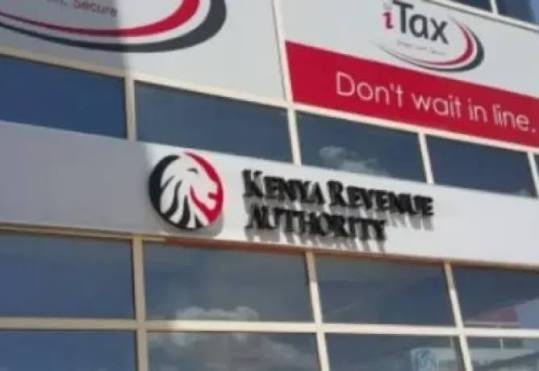
The Kenya Revenue Authority (KRA) has introduced new 15% minimum top-up tax regulations requiring qualifying multinational companies operating in Kenya, including potentially Google and Microsoft, to notify the tax authority by November 17, 2026, as the government seeks to ensure large international businesses pay a minimum effective tax rate on profits generated locally.
The new requirements are contained in the Income Tax (Minimum Top-Up Tax) Regulations, 2026, published on September 18, 2026, under Legal Notice No. 189. They operationalise provisions introduced through amendments to the Income Tax Act in December 2024.
The regulations target multinational enterprise groups with consolidated annual revenues of at least €750 million, equivalent to approximately KSh110 billion, in at least two of the four preceding financial years. Kenyan resident companies and permanent establishments belonging to qualifying groups fall within the scope of the rules.
International companies potentially affected include Google, Microsoft, Coca-Cola, Unilever, Nestlé, IBM, DHL and TotalEnergies, although their inclusion depends on meeting the revenue threshold and other eligibility requirements.
Under the framework, qualifying groups must calculate their effective tax rate on profits generated in Kenya. Where the rate falls below 15%, the affected businesses may be required to pay additional tax to bridge the difference, subject to adjustments and exemptions provided under the regulations.
The initial compliance requirement is notification to KRA within 60 days of the regulations' publication. Companies must provide information identifying the Kenyan entity, its multinational group, ultimate parent company, financial year and other group members operating locally.
According to tax advisory firm Bowmans Kenya, multinational groups with several Kenyan subsidiaries may appoint one designated entity to submit the initial notification on behalf of their local operations.
The regulations also introduce additional reporting obligations, including the filing of minimum top-up tax returns by the end of the sixth month following a company's financial year. Any top-up tax payable must be settled by the end of the fourth month after the financial year closes.
However, eligible multinational groups can access transitional reporting relief through the Country-by-Country Reporting Safe Harbour, which simplifies calculations for qualifying businesses until July 2029.
Companies that fail to comply face penalties under the Tax Procedures Act, including charges for late filing and payment, as well as additional penalties for false or misleading tax declarations.
The new framework is part of Kenya's implementation of the Organisation for Economic Co-operation and Development's global minimum tax agreement, commonly known as Pillar Two, which seeks to limit profit shifting and ensure large multinational businesses contribute taxes in the countries where they operate.
KRA's immediate priority is to identify covered businesses and ensure they meet the November 17 notification deadline as the new reporting and tax compliance framework takes effect.