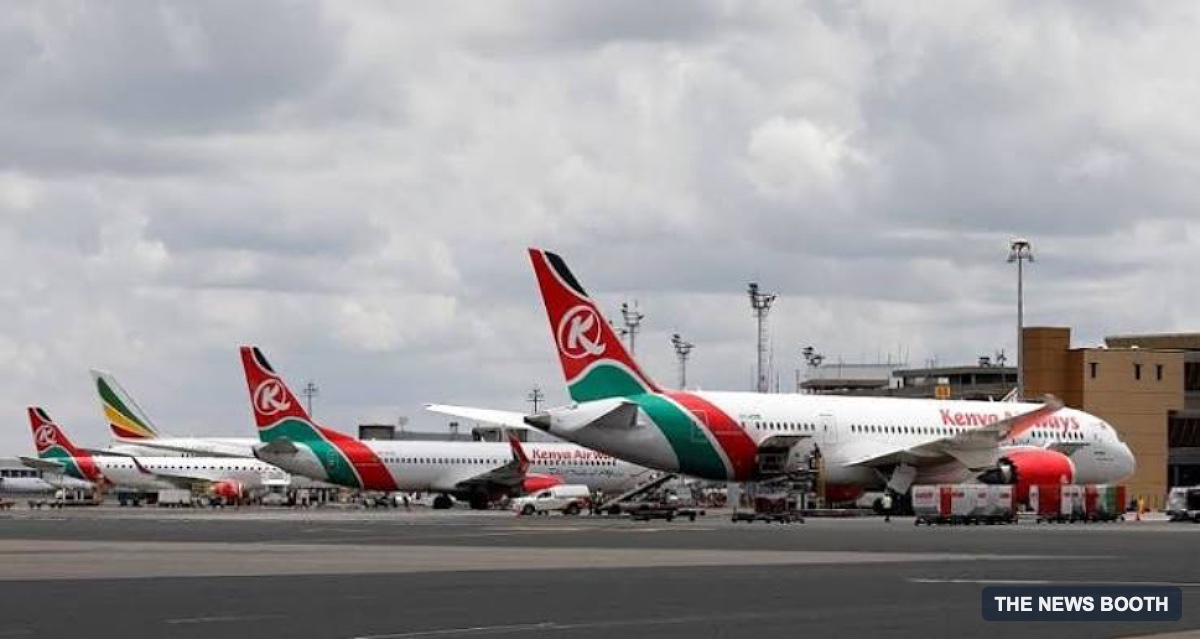
Kenya Airways has warned that its earnings for the financial year ending December 2026 will fall by at least 25 per cent compared with 2025, citing higher aviation fuel costs and persistent aircraft spare-parts shortages. In a November 26 announcement, the airline's board said global supply-chain disruptions and delays in component deliveries had affected fleet availability, operational reliability and profitability.
The warning comes despite what the airline describes as strong passenger demand and revenue growth. The carrier says it has struggled to translate that demand into improved financial performance because fewer available aircraft and higher operating expenses have constrained its operations.
The Middle East conflict has been a major source of pressure through higher jet fuel prices. Kenya Airways reported that its fuel costs increased by 32 per cent in the first half of 2026 compared with the same period in 2025. Fuel accounted for approximately 32 per cent of total operating expenses during the period.
The airline's half-year results illustrate the financial strain. Revenue increased by nine per cent to Sh81.25 billion in the six months to June, even as available capacity declined by nine per cent.
However, total operating costs rose by 14 per cent to Sh91.9 billion, contributing to a loss after tax of Sh16.08 billion, compared with Sh12.15 billion a year earlier.
The latest warning follows a difficult 2025, when Kenya Airways recorded a net loss of Sh17.16 billion, reversing a Sh5.43 billion profit in 2024. The carrier is therefore facing another challenging financial year as it attempts to restore aircraft availability and improve its cost structure.
The board said management would prioritise restoring the fleet in 2027, alongside cost-reduction measures and cash conservation. The airline has also been pursuing capital-raising and restructuring initiatives to strengthen its financial position and support aircraft maintenance.
The warning is important for investors because it signals that the airline's recovery remains vulnerable to costs and operational constraints beyond its immediate control. For passengers, prolonged aircraft shortages could also affect scheduling and service reliability, although the company has not announced specific route reductions in the warning.
The next key indicators will be the airline's full-year results, progress in returning aircraft to service and whether fuel prices and spare-parts supply improve sufficiently to support its recovery plans.