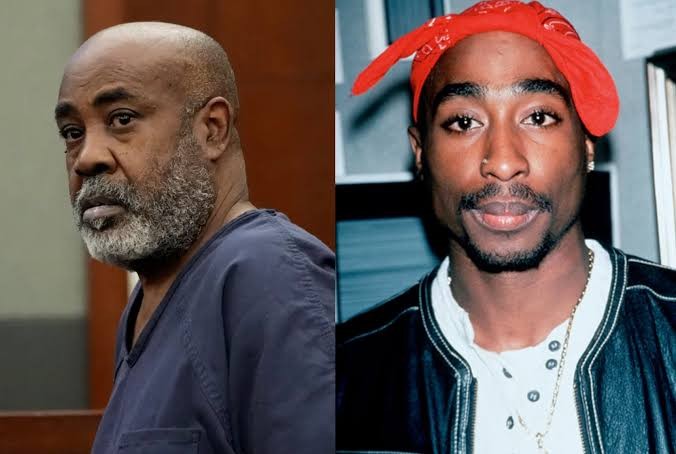
Former gang leader Duane “Keffe D” Davis has been sentenced to at least 40 years in prison for orchestrating the 1996 murder of American rap superstar Tupac Shakur in Las Vegas.
Davis, 63, was found guilty in September of one count of murder with a deadly weapon over Shakur’s death in a drive-by shooting on September 7, 1996. He has vowed to appeal the conviction.
Prosecutors argued that although Davis did not pull the trigger, he organised the killing and supplied the firearm used in the attack.
During Tuesday’s sentencing hearing, prosecutor Marc DiGiacomo accused Davis of spending years publicly boasting about his involvement in Shakur’s murder, describing the killing as an act with far-reaching consequences.
Shakur’s sister, Sekyiwa Shakur, told the court that her brother’s death had devastated their family and robbed the world of a talented artist who wanted to make a difference in his community.
“The loss of Tupac, for a long time, crippled my family,” she said.
She urged the judge to impose the maximum sentence, telling Davis that he should spend his time in prison reflecting on the consequences of his actions.
Shakur’s brother, Maurice Shakur, also addressed the court, asking for the longest possible sentence.
When asked by Judge Carli Kierny whether he wished to make a statement before sentencing, Davis replied that he had nothing to say and would appeal the case.
In her remarks, Kierny told Davis that he had no right to take another person’s life and deprive a family of its future, emphasising that Shakur’s death had left a lasting impact on the world.
“You don’t get to take a man from his family,” the judge said. “You don’t get to take his very life, his whole future from him, and just walk away from it, especially when that man is Tupac Shakur. The world never forgot about him and his death.”
The prosecution relied heavily on Davis’ public statements about the killing, including claims that he was inside the white Cadillac from which the fatal shots were fired.
In a secret police interview in 2008 concerning the murder of fellow rapper Christopher Wallace, popularly known as The Notorious B.I.G., Davis reportedly disclosed details about his involvement in Shakur’s killing under an agreement intended to protect him from criminal prosecution.
Wallace was killed in a separate shooting in March 1997, just months after Shakur’s death.
Davis later expanded on his claims in his 2019 memoir, *Compton Street Legend*, and in media interviews.
Prosecutors argued that these public disclosures voided the protective agreement, allowing authorities to pursue criminal charges.
A judge subsequently permitted the 2008 police interview to be used as evidence at trial.
Davis’ defence team maintained that his statements were exaggerated or fabricated to generate publicity and boost book sales.
However, prosecutors argued that Davis, a former leader of the South Side Compton Crips street gang, had orchestrated the shooting and supplied the weapon used by his nephew, Orlando Anderson, who was accused of firing the fatal shots.
Anderson, who denied involvement in Shakur’s killing, died in an unrelated shooting in 1998.
Shakur was 25 when he was killed, at the height of a career that made him one of hip-hop’s most influential artists. He has sold more than 75 million records worldwide.
For nearly three decades, his murder remained one of the most closely watched unsolved cases in American music history, fuelling numerous theories before Davis’ conviction.
Clarify the sentence and appeal statusTighten the opening for web readers