The Africa Centres for Disease Control and Prevention (Africa CDC) has strongly rejected a report published by Health Policy Watch, accusing the publication of distorting facts, relying on anonymous sources and advancing what it describes as a politically motivated attack against the continental health agency and its Director General, Dr Jean Kaseya.
In a statement responding to the article published on November 16, 2026, Africa CDC said the publication ignored official records and documents supplied to its author before publication, despite requesting answers and supporting information from the institution.
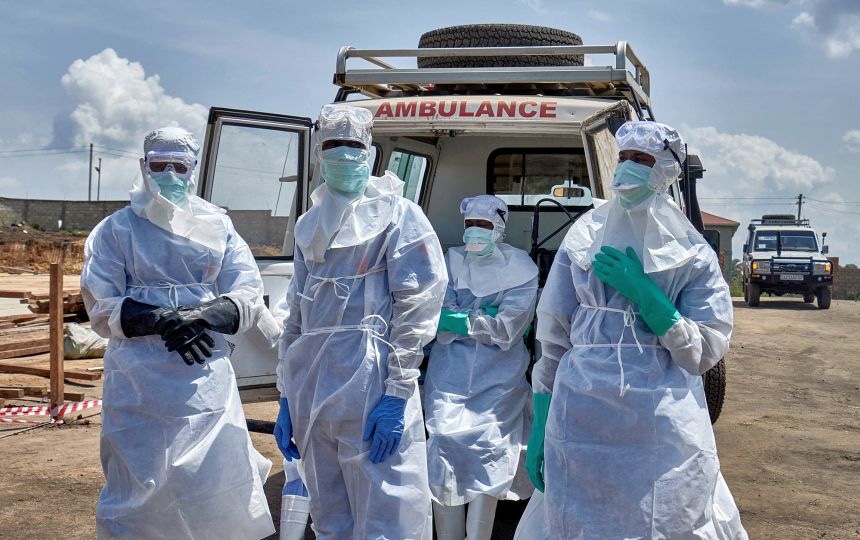
The agency termed the report an attempt to undermine an African institution at a time when the continent is confronting serious public health threats, including the ongoing Ebola response.
Africa CDC's response to allegations
Africa CDC maintained that it is an autonomous institution of the African Union, governed by a statute adopted by member states in February 2022, and accountable to the AU Commission Chairperson, its Governing Board, the Committee of Heads of State and Government and the AU Assembly.
It also dismissed claims surrounding the alleged suspension of its Director General, insisting Kaseya has never been suspended, sanctioned or placed on leave since assuming office in April 2023.
According to the agency, no formal disciplinary proceedings or suspension decision has ever been issued against him. It further defended his April 2026 performance evaluation, which awarded him an Outstanding Performance rating.
On questions surrounding Kaseya's potential renewal, Africa CDC said the process falls exclusively within the mandate of its statutory governing organs, including the Governing Board, the Committee of Heads of State and Government and the AU Assembly.
The agency also disputed suggestions of a staffing crisis, reporting that its workforce grew from 262 employees in 2023 to 620 in 2026, representing a 137 per cent increase.
It said only seven senior employees at grade P5 and above resigned during the period, while 18 others were recruited. Representation of African member states among its workforce also increased from 21 to 49 out of 55 countries.
Africa CDC further defended the redeployment of three regional directors, saying the decision was made by the Chairperson of the AU Commission in accordance with his statutory supervisory powers, with the affected officials retaining their ranks, salaries and benefits.
Financial accountability and audit findings
On financial accountability, the agency challenged the article's reference to adverse audit findings, stating that the AU Board of External Auditors issued an unmodified, or unqualified, opinion on its 2025 financial statements in May 2026.
It acknowledged audit recommendations relating to bank reconciliations, internal oversight and travel management but said these were being implemented. It added that previously outstanding reconciliation items amounting to 23 million US dollars had since been reconciled.
Africa CDC also defended its travel expenditure, saying approximately 88 per cent of its 2025 travel budget supported emergency responses and capacity-building activities in member states.
The agency dismissed comparisons between its 463-million-dollar grant portfolio and a 52.9-million-dollar year-end cash balance, arguing that the figures represent different financial measures.
It further defended preparations for the fifth Conference on Public Health in Africa (CPHIA 2026), scheduled to open in Ethiopia, saying 39,069 participants from 129 countries had registered by November 17.
Upcoming Conference on Public Health
Africa CDC cited its expanding grant portfolio, increased funding partners and continental health security initiatives as evidence of institutional progress.
It maintained that it would not be distracted by what it described as politically motivated criticism, pledging to continue protecting the health of approximately 1.4 billion Africans.
Kaseya was quoted as saying Africa's health security future would be determined by Africans, in accordance with the continent's own rules, while receiving support from international partners.