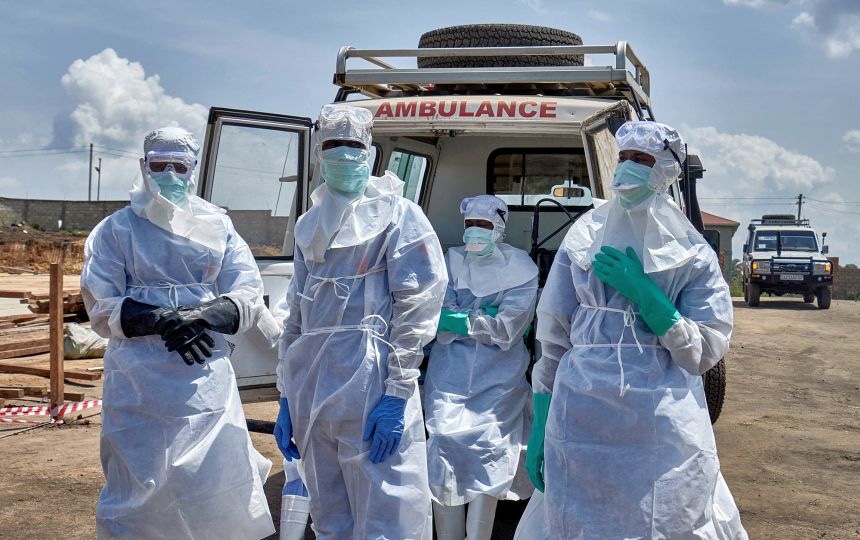
The Ebola outbreak in the Democratic Republic of Congo has surpassed 11,000 cases, with the government reporting 11,042 infections and 5,387 deaths.
The latest figures released by the Congolese Health Ministry highlight the growing severity of the outbreak, which has become one of the deadliest Ebola outbreaks recorded in the country.
Authorities said the outbreak, declared in mid-May, has spread to eight of the Democratic Republic of Congo’s 26 provinces.
Health officials have faced major challenges in containing the disease, including armed conflict, a strained healthcare system, poor road networks and growing mistrust among some communities.
Violence and misinformation have also complicated efforts to respond to the outbreak, with some residents questioning the existence or severity of the disease.
The resurgence of fighting in Ituri and North Kivu provinces, two of the main affected areas, has raised further concern among health authorities.
Medical teams have called for an end to the violence to allow healthcare workers to safely reach patients and communities in need of assistance.
Health facilities and medical workers have also come under attack as suspicion and misinformation surrounding Ebola continue to affect the response.
The virus responsible for the current outbreak has no known vaccine or specific treatment, making early detection, isolation and supportive care critical in reducing deaths and transmission.
Experts have urged Congolese authorities and international health partners to strengthen efforts to contain the outbreak and improve access to affected communities.
The disease has also raised regional concerns following reports of Ebola spreading to other African countries, including Uganda, Kenya and Nigeria.
Ebola has caused dozens of outbreaks since it was first identified in 1976. The largest and deadliest outbreak occurred in West Africa between 2014 and 2016, when more than 28,000 infections and over 11,000 deaths were recorded.
The scale of the current outbreak has raised alarm among health authorities, with the latest figures pointing to a rapidly escalating public health emergency.
Authorities continue to appeal for greater cooperation from communities and an end to attacks against health workers as efforts to control the spread of the virus continue.