The United States and the Democratic Republic of Congo (DRC) are pushing to advance investment in critical minerals, energy and regional infrastructure, as both countries seek to translate their strategic partnership into projects that deliver economic benefits.
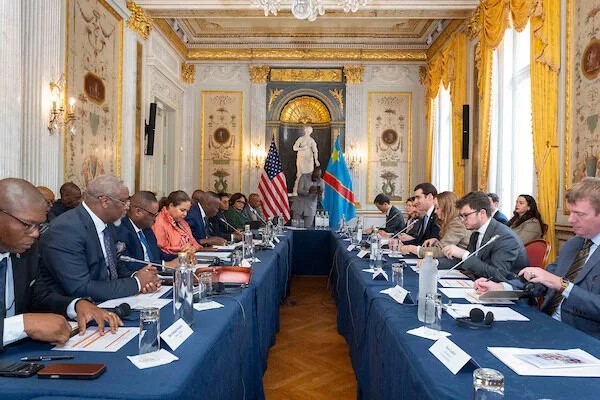
The two governments held the second meeting of the Joint Steering Committee of their Strategic Partnership Agreement in Paris, France, on November 5, reviewing progress made since the agreement entered its implementation phase in February 2026.
In a joint statement released by the US Department of State on November 6, the delegations highlighted the signing of a concession agreement for the Lobito Corridor, growing interest from American companies in the DRC's Strategic Asset Reserve and an expanding investment pipeline presented by the US International Development Finance Corporation (DFC).
The Lobito Corridor emerged as one of the key developments discussed during the meeting, with both governments recognising the concession agreement as an important step towards improving regional trade and connectivity.
The transport route is designed to connect mineral-producing areas in the DRC and neighbouring Zambia to Angola's Atlantic port of Lobito, providing an alternative route for exporting copper, cobalt and other resources to international markets.
The delegations also discussed the next steps for the Grand Inga hydropower project on the Congo River, alongside opportunities for American companies in critical minerals processing, exports and the wider energy sector.
The discussions form part of a broader agreement signed on December 4, 2025, aimed at strengthening economic cooperation, attracting American investment and developing more resilient mineral supply chains.
A central component of the agreement is the Strategic Asset Reserve (SAR), through which the DRC designates strategic mineral assets and exploration opportunities for potential investment. Under the framework, eligible American companies receive a right of first offer on projects within the reserve.
The partnership also identifies priority strategic projects intended to support infrastructure development and greater economic value from the country's natural resources.
For Washington, the arrangement offers an opportunity to strengthen access to critical minerals needed in modern industries and reduce dependence on concentrated global supply chains. The DRC, meanwhile, is seeking investment that will allow it to move beyond exporting raw minerals and expand local processing and industrial development.
However, Kinshasa has emphasised that the success of the partnership should be measured by actual projects and investments rather than agreements alone.
DRC Economy Minister Daniel Mukoko Samba has called for the partnership to deliver tangible results, including improved electricity access, domestic mineral processing and support for stability in the country's conflict-affected eastern region.
The latest meeting also reviewed legislation recently adopted by the Congolese government to establish tax and customs rules for projects covered by the agreement. Both sides committed to coordinating its implementation, saying predictable regulations would be important in attracting long-term investment.
The joint statement further stressed that Congolese workers and businesses should benefit through employment opportunities, skills development and the growth of local and American companies.
Although the DFC presented an expanding investment pipeline, the governments did not announce new financing commitments or disclose specific funding amounts for the projects discussed.
The delegations also reaffirmed that peace and security remain fundamental to the partnership, linking stability in the DRC to the achievement of its economic objectives.
Both governments said they would continue coordinating the implementation of the agreement, with the focus on turning investment commitments into projects that create jobs, strengthen supply chains and deliver lasting economic benefits.