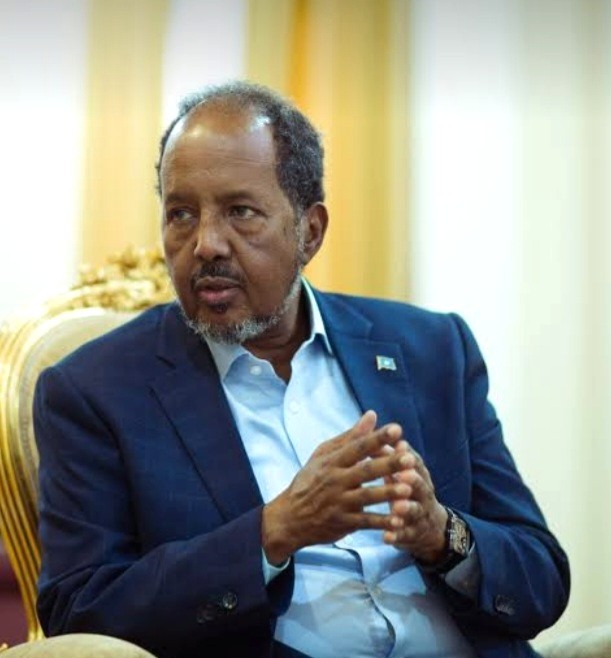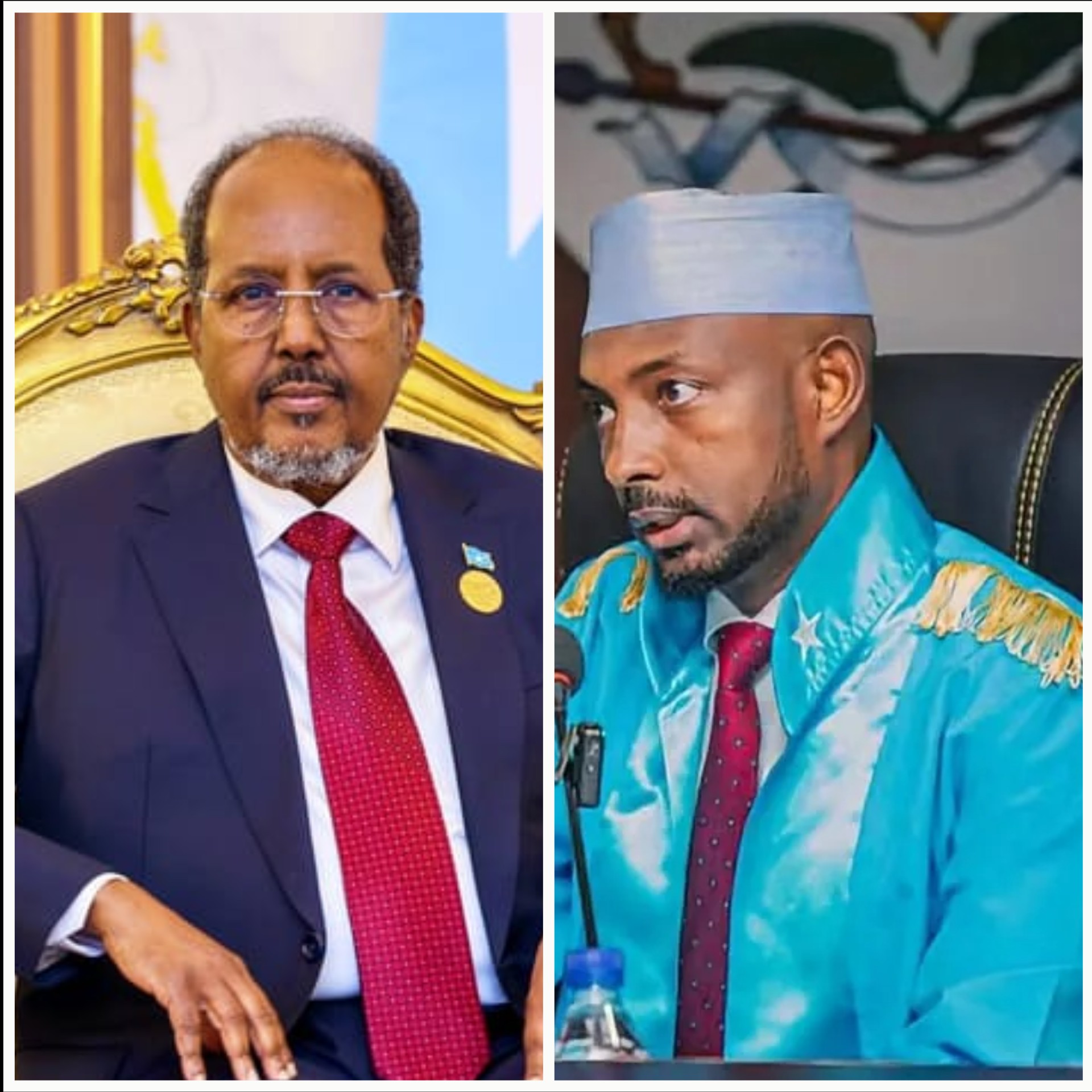
Somalia's Chief Justice Baashe Yusuf Ahmed has issued a stern warning against the abuse of presidential power, insisting that no individual, including President Hassan Sheikh Mohamud, is above the law amid an escalating confrontation between the executive and the judiciary.
In a strongly worded statement, Ahmed accused the presidency of undermining judicial independence through political interference and intimidation, warning that attempts to influence court decisions threaten the country's constitutional order.
“Legal authority cannot be exercised while ignoring the conditions, procedures, and safeguards that limit it,” the Chief Justice declared.
Ahmed maintained that presidential powers are not absolute and must be exercised within constitutional and legal limitations, cautioning that weakening institutions mandated to hold political leaders accountable could pave the way for authoritarian rule.
He also questioned the security situation in Mogadishu, revealing that he himself could not feel safe in the capital and asking how opposition politicians and regional leaders could be expected to trust assurances of their safety.
The remarks come amid a deepening constitutional crisis following a Supreme Court ruling that President Mohamud unlawfully extended his presidential mandate and that his decision to dismiss the Chief Justice was unconstitutional.
The court's ruling, delivered on Thursday, declared Ahmed's dismissal null and void, a day after the president announced his removal and appointed Ibrahim Idle Suleiman, a former Chief Justice, to replace him.
The Supreme Court also ruled that constitutional amendments approved by parliament in March to extend Mohamud's four-year mandate by one year could not be applied retrospectively to his current term, which expired in May.
The president's administration had defended the extension as necessary to implement constitutional reforms aimed at transitioning Somalia from its clan-based electoral arrangement to a system of nationwide direct elections.
However, opposition groups have accused Mohamud of using the reforms to prolong his stay in power.
In addition to nullifying the dismissal, the court directed political leaders to agree on an electoral roadmap within 30 days and hold elections within 90 days, potentially disrupting plans for parliamentary elections scheduled for April 15, 2027, and a presidential vote the following month.
The Chief Justice insisted that court decisions must be challenged through established legal procedures rather than political pressure or unilateral executive action.
The ruling has attracted strong reactions from opposition leaders, with former President Sharif Sheikh Ahmed warning that the country was facing a grave political crisis and calling on Mohamud to pursue a consensus-based approach.
Former Prime Minister Hassan Ali Khaire also accused the president of deploying security forces to the Supreme Court and attempting to arrest the Chief Justice, describing the alleged action as an assault on the judiciary.
The AFP news agency, however, said it could not independently verify the reported security deployment, although photographs circulating in Somali media appeared to show armed personnel inside the court compound.
President Mohamud has called for national talks from November 14 to 18 to resolve the political deadlock, but opposition leaders have questioned his legitimacy to convene the discussions.
The confrontation comes as Somalia continues to battle al-Shabab militants, who control significant parts of the countryside despite years of military operations. Uganda, the largest contributor of troops to the African Union mission fighting the militants, has also announced plans to withdraw its forces by the end of the year, raising further concerns about the country's security.
The latest developments have placed Somalia's democratic institutions under growing pressure, with the standoff between the presidency and judiciary threatening to complicate an already fragile political and security situation.