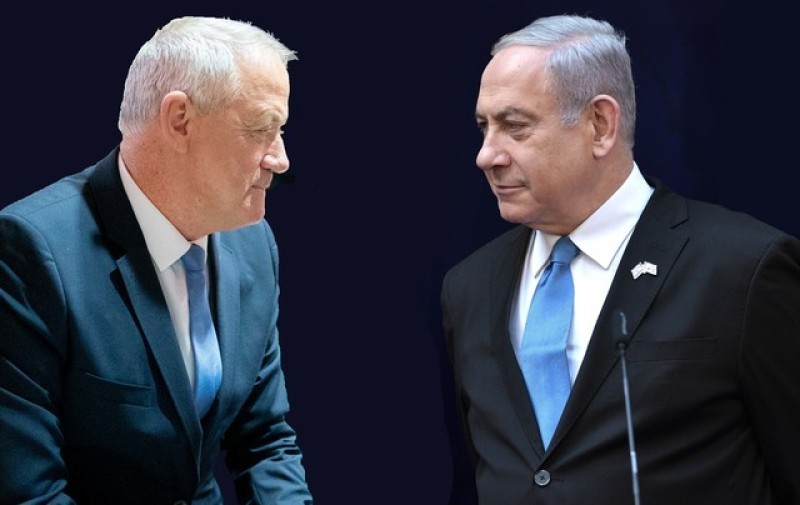
Israel’s general election has ended without a clear winner, with exit polls suggesting that neither Prime Minister Benjamin Netanyahu nor former military chief Gadi Eisenkot has secured enough seats to command a majority in parliament.
Projections released by Israeli broadcasters Kan, Channel 12 and Channel 13 showed a closely contested race, leaving the country facing potentially prolonged negotiations to form its next government.
Two broadcasters projected that Eisenkot’s Yashar party and three other Jewish opposition parties in his Change Bloc would secure around 51 seats in the 120-member Knesset. Netanyahu’s Likud party and its far-right and ultra-Orthodox allies were projected to win a similar number, while a third broadcaster gave the prime minister’s bloc a three-seat lead.
The projections indicate that coalition negotiations could determine who ultimately forms the next government, with neither side appearing to have an immediate path to a parliamentary majority.
Arab parties could play a significant role in the process after exit polls projected that the two parties would win a combined 18 or 19 seats, a record number according to the initial estimates. Their final representation and willingness to support either bloc could influence the balance of power in the Knesset.
Voter participation was also notably high, with the Central Elections Committee reporting turnout of 77.7 per cent when polling stations closed at 10pm local time. The figure was the highest recorded at that hour since 1999.
Official results were expected to begin emerging overnight, although the final count would take longer because of approximately 600,000 absentee ballots, mostly cast by military personnel. These ballots account for about 10 per cent of the total vote and were not expected to be fully counted until Thursday.
At Yashar party headquarters in Tel Aviv, supporters cheered and chanted “Bibi, go home!” after the first exit polls suggested that Eisenkot’s bloc could emerge as the largest grouping in parliament. The initial projections put the opposition bloc at between 52 and 53 seats, compared with 50 for Netanyahu’s governing coalition.
However, exit polls are estimates rather than official results, and the final distribution of seats could change as votes are counted.
Once the results are confirmed, Israel’s president will consult political factions before inviting the party leader considered most likely to form a successful coalition to begin negotiations.
The process could take several weeks, as the prospective prime minister seeks support from other parties to secure a majority. If the candidate fails to form a government, another leader may be given an opportunity to try.
Should those efforts also fail, Israel could be forced into another election, extending the political uncertainty.