UK inflation accelerated to a one-year high in October, strengthening expectations that the Bank of England could raise interest rates for a second consecutive month as higher energy and fuel costs continue to squeeze households and businesses.
Data published by the Office for National Statistics (ONS) on Wednesday, November 18, 2026, showed that annual consumer price inflation rose to 3.6% in October, up from 3.5% in September. The latest reading puts inflation further above the Bank of England’s 2% target and marks its highest level in a year.
Higher transport costs, particularly motor fuels, made the largest upward contribution to the monthly increase in inflation. The figures reflect the impact of rising global energy prices linked to the conflict in the Middle East, which has disrupted oil and gas supplies and pushed up fuel costs.
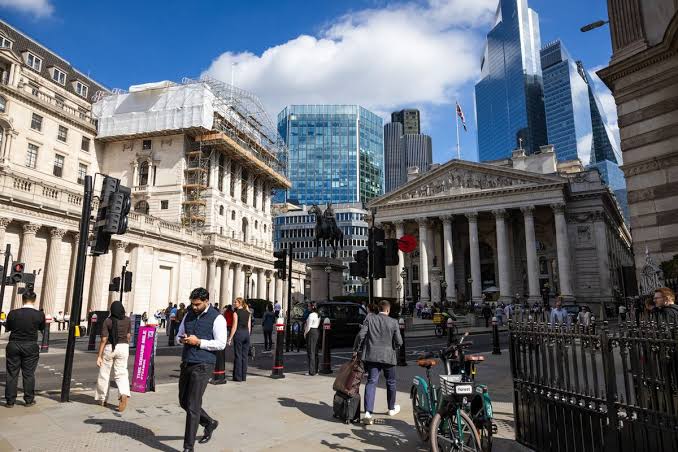
The increase comes after the Bank of England raised its benchmark interest rate by 0.25 percentage points to 4% on November 4, its first increase in more than three years. The decision was supported by eight members of the Monetary Policy Committee, while one member preferred a larger increase.
The latest inflation figures have kept the possibility of another rate hike at the Bank’s December 17 meeting alive, as policymakers assess whether higher energy costs will continue spreading through the wider economy.
However, underlying inflation measures present a more mixed picture. Core inflation, which excludes energy, food, alcohol and tobacco, remained broadly unchanged at 2.8% in October. Services inflation also held steady at 3.7%, while goods inflation increased from 3.2% to 3.5%.
The Bank of England has warned that inflation could approach 5% by the middle of 2027 if energy price pressures persist. It has also said future interest rate decisions will depend on developments in energy markets, wage growth and whether businesses pass higher operating costs on to consumers.
A further increase would raise borrowing costs for households and businesses, potentially putting additional pressure on mortgage holders, consumers using credit and companies financing their operations.
The December decision will therefore depend not only on the latest inflation reading but also on whether the energy shock becomes entrenched in domestic prices and wages.
For international markets, the UK’s inflation trajectory is another indication of how geopolitical tensions and energy supply disruptions are complicating central banks’ efforts to bring prices under control.