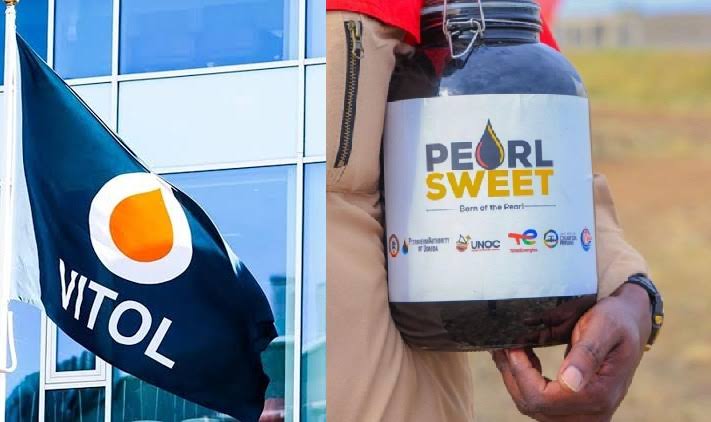
Uganda has signed a 10-year agreement with global energy trader Vitol to market its Pearl Sweet crude oil internationally, marking a major step towards entering the global petroleum market after years of delays in developing its oil industry.
The agreement was signed on November 20, 2026, at State House in Entebbe, involving the Uganda National Oil Company (UNOC), the Ministry of Energy and Mineral Development and Vitol. President Yoweri Museveni witnessed the signing.
Under the arrangement, Vitol will identify international buyers and market Uganda's crude to secure competitive prices, while UNOC retains oversight of transactions and the buyers purchasing the oil.
The partnership will also provide technical support, training and access to international crude markets as Uganda develops its capacity to independently trade petroleum.
Initially, Uganda will sell its crude on a Free On Board (FOB) basis at the export terminal in Tanga, Tanzania, where the East African Crude Oil Pipeline (EACOP) terminates. Buyers will take responsibility for transporting the oil from the export terminal to their destinations.
The 1,443-kilometre pipeline will connect Uganda's oilfields in the Albertine Graben to the Tanzanian coast, providing the country with an export route to international markets.
Uganda's crude, branded Pearl Sweet, will be produced from the Tilenga and Kingfisher oilfield developments operated by TotalEnergies, China's CNOOC and UNOC. The blend has relatively low sulphur content, making it attractive to refiners, although its high wax content requires heating during transportation.
The agreement formalises an arrangement first announced in September, when UNOC appointed Vitol to market the government's and national oil company's share of crude production.
However, Uganda's first commercial oil production and exports have been pushed back to before the end of June 2027. Officials attributed the latest delay to disruptions in international supply chains that affected the delivery of critical metering, electrical instrumentation and telecommunications equipment.
The EACOP project was reported to be 93.9 per cent complete during recent discussions between Uganda and Tanzania, although testing, commissioning and operational preparations remain necessary.
The agreement gives Uganda a commercial route for selling its oil, but the country must still complete the infrastructure required to produce, transport and export crude.
For East Africa, the development strengthens Tanzania's position as a regional petroleum export and logistics gateway through Tanga. It also reinforces the importance of cross-border infrastructure in determining how landlocked Uganda accesses international energy markets.