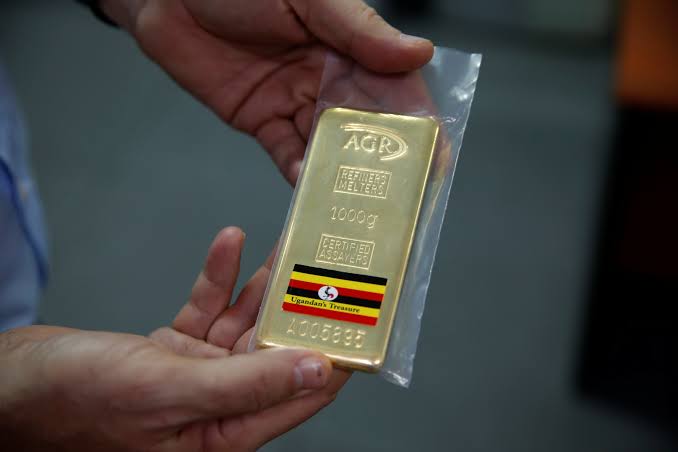
Uganda earned a record $8.91 billion from gold exports in the financial year ended June 2026, more than doubling receipts from the previous year as higher international prices and increased shipments strengthened the country's foreign exchange earnings.
The earnings rose 111.5% from $4.21 billion in FY2024/25, according to Uganda's Ministry of Finance. Export volumes increased 42.8% to approximately 70.09 tonnes, from 49.09 tonnes a year earlier.
Gold accounted for 56.5% of Uganda's total merchandise exports, which climbed 46.4% to $15.76 billion. Its export earnings were more than four times the $2.19 billion generated by coffee, traditionally one of the country's major agricultural exports.
The figures highlight how heavily Uganda's export performance is becoming dependent on gold. Exports excluding the precious metal grew by just 4.6% to approximately $6.85 billion, suggesting that much of the headline export growth came from a single commodity.
The momentum continued in September 2026, when receipts from mineral products, largely driven by gold, reached $839.99 million, representing a 104.4% increase from the same month in 2025. Total merchandise exports rose 47.7% to $1.42 billion during the month.
However, the rapid expansion in shipments has also drawn attention to the origin of the gold passing through Uganda.
Reuters reported on November 24 that an industry source questioned whether the country's relatively small domestic production could account for the sharp increase in export volumes, suggesting that gold from neighbouring Democratic Republic of Congo could be contributing to the trade.
Ugandan authorities have previously denied that Congolese gold is being smuggled through the country, maintaining that gold processed and traded in Uganda is legitimately sourced.
The country's growing role as a gold processing and trading hub therefore raises questions about supply-chain transparency, traceability and the origins of exported bullion.
While higher gold prices have boosted foreign exchange earnings, the concentration also exposes Uganda to fluctuations in international prices and changes in global demand.
The latest figures underline the importance of diversifying exports, expanding domestic production and strengthening oversight of gold sourcing to ensure the gains translate into sustainable economic benefits.