Pesalink, the interbank payment switch run by Integrated Payment Services Limited under the Kenya Bankers Association, has introduced till and Paybill services that let customers pay businesses directly through its network. Reports show that the switch has attained basic inclusivity status with the launch, setting up more competition for Safaricom's M-Pesa in merchant payments.
Pesalink has spent years preparing for merchant payments. In January 2024, after an M-Pesa paybill outage, it announced plans for a merchant payment option comparable to Lipa na M-Pesa. Until now, the switch has been used mainly for bulk transactions, invoices, rent and bank-to-bank transfers, and its brand has been largely hidden behind bank apps and fintech wallets.
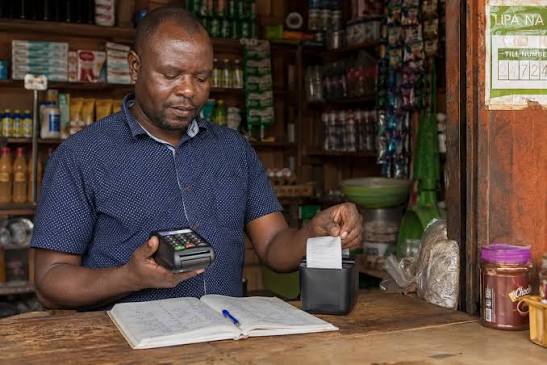
The new services change that role. Through till and Paybill numbers, customers can pay businesses directly over the Pesalink network, rather than through a mobile wallet. That gives merchants a bank-backed alternative to M-Pesa's Lipa na M-Pesa, which has dominated business collections in Kenya for years.
The competition is already intensifying on price. In July 2026, 19 banks cut their PesaLink transfer charges, and PesaLink became free for customers of participating banks on transfers up to Sh1,000. Those cuts sharpened the contest with M-Pesa, which charges Sh7 for smaller transfers.
Safaricom has responded with its own cuts. From August 7, 2026, the company reduced charges on moving funds from business tills to personal wallets and on Paybill transfers, with some reductions of up to 50 percent. It also lowered fees on Pochi la Biashara and Lipa na M-Pesa Buy Goods, the company said, in line with the Central Bank's pricing principles on competition and affordability.
Competition from banks has been a long time coming. Commercial banks have watched M-Pesa dominate person-to-person and merchant payments, and several have launched their own paybill numbers in recent years. The new Pesalink services bring that competition onto a shared national switch rather than into individual bank systems.
Scale remains the central challenge. Pesalink is a relatively unknown brand compared with M-Pesa, and its ability to win merchants depends on how quickly banks, fintechs and retailers adopt the service. Analysts have also noted that the regulator must balance lower costs and interoperability against concerns about a bank-dominated switch.
The next signals will be the uptake among merchants, the fees charged on the new services, and whether M-Pesa's pricing and reliability respond further. Customers and businesses will watch whether the new options deliver the lower costs and higher reliability that have prompted demand for alternatives.