Education authorities across Europe are facing growing pressure to strengthen security measures after threatening emails targeting schools triggered widespread concern in Italy, the United Kingdom and Ireland.
The incident has drawn attention to the potential of anonymous digital communications to disrupt public institutions and create panic among communities, even without evidence of an actual physical attack.
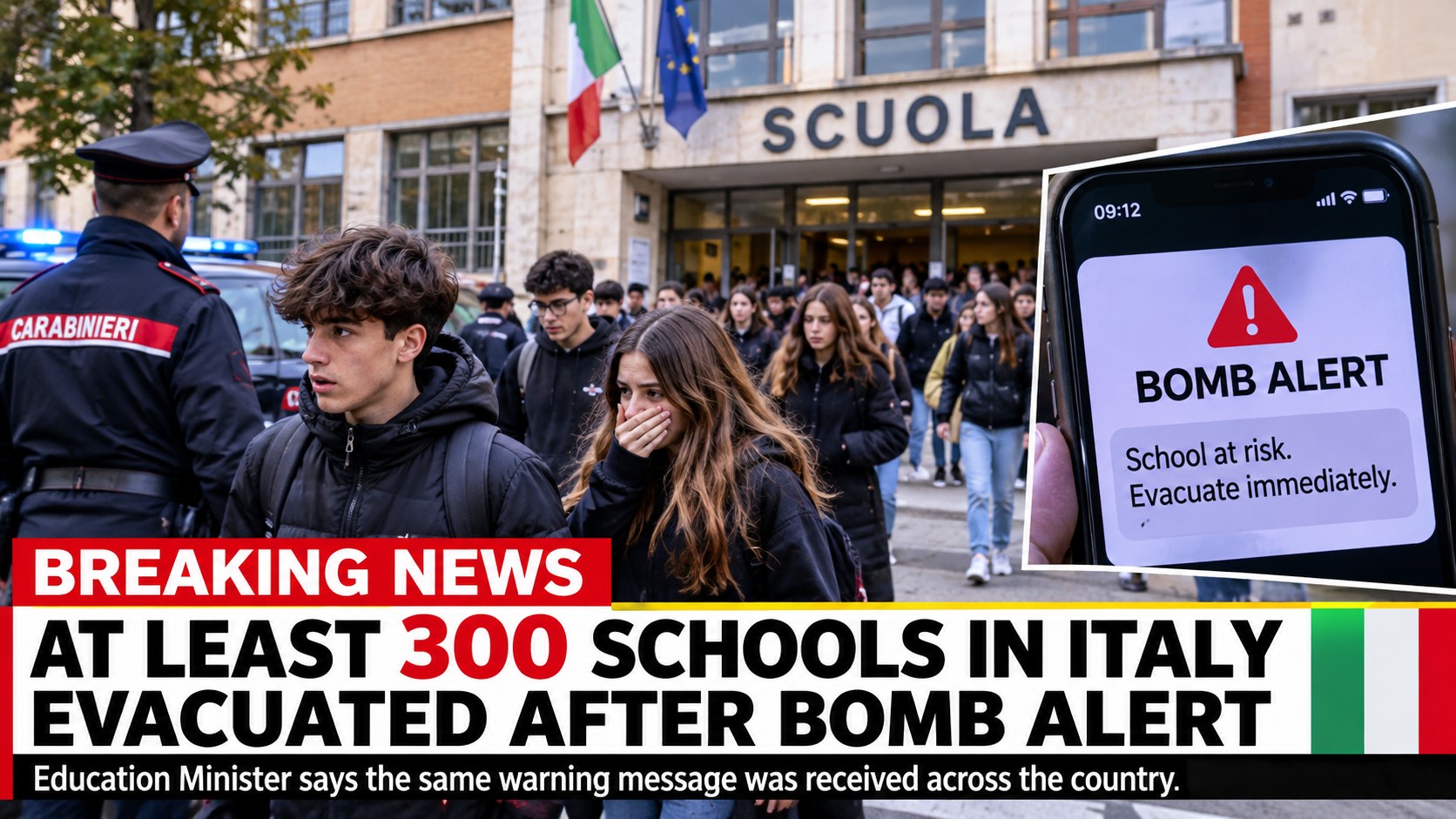
In Italy, approximately 6,300 schools received bomb warnings on Wednesday, prompting emergency responses and the evacuation of affected institutions. Police officers were deployed to inspect classrooms and establish whether the threats presented any genuine danger.
The messages also contained a warning against Prime Minister Giorgia Meloni, raising concerns about the wider targets of the communications. However, Meloni reassured the public that the situation was under control and that relevant security agencies were monitoring developments.
Meanwhile, educational institutions in Scotland, Northern Ireland and the Republic of Ireland received similar emails but did not suspend lessons after the warnings were assessed as hoaxes.
The incident comes amid a series of security disruptions across Europe, with recent cyberattacks affecting supermarkets, blood banks, aviation systems and media organisations.
European officials have expressed concern that hostile actors could be exploiting digital platforms to interfere with normal public activities and weaken confidence in government institutions.
Russia has denied accusations of involvement in campaigns targeting European countries supporting Ukraine. Iran has also rejected allegations connecting it to a cyberattack in France that reportedly affected hundreds of supermarkets.
Italian Defence Minister Guido Crosetto described the school warnings as attempts to spread fear and anxiety. However, he cautioned against assuming that every incident originated from a foreign government, noting that individuals seeking attention could also be responsible.
The developments have renewed discussions about cybersecurity preparedness, intelligence sharing and emergency response coordination among European countries.
Beyond the immediate disruption, the episode demonstrates how threats communicated electronically can overwhelm institutions, interrupt essential activities and place additional pressure on security agencies responsible for protecting citizens.
Authorities continue monitoring the situation as concerns grow over the increasing use of digital platforms to spread intimidation across national borders.