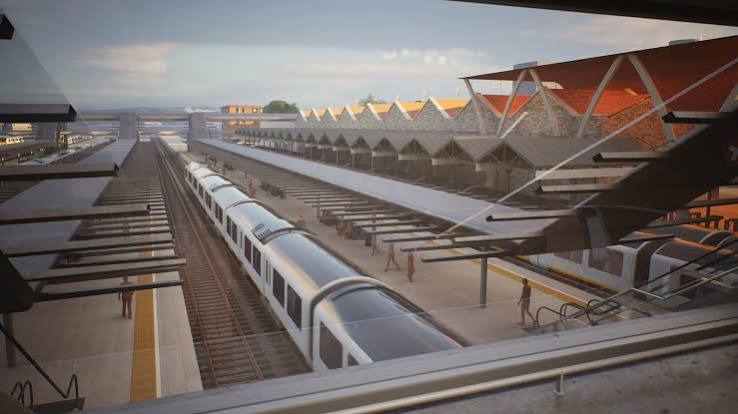
Tanzania and Uganda have agreed to fast-track preparations for a new standard gauge railway (SGR) connecting Isaka in northern Tanzania to Mpondwe on Uganda's border with the Democratic Republic of Congo (DRC), in a project expected to strengthen regional trade and reduce transport costs.
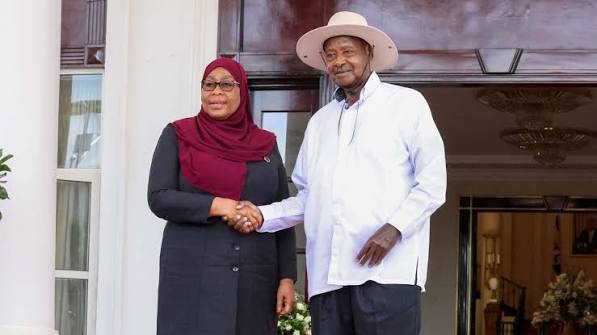
Presidents Samia Suluhu Hassan and Yoweri Museveni witnessed the signing of a framework agreement for the Isaka–Lusahunga–Murongo/Kikagati–Mpondwe railway during bilateral talks at State House in Entebbe on November 18, 2026.
The proposed railway will pass through Lusahunga in Tanzania before crossing into Uganda through the Murongo/Kikagati border area and continuing to Mpondwe, near the DRC frontier.
The two leaders directed their ministries, railway authorities and other institutions to accelerate feasibility studies, technical designs, financing arrangements and other preparatory work.
The agreement marks a significant step towards establishing another transport corridor into the Great Lakes region, where businesses face high logistics costs and limited reliable transport connections for moving goods across borders.
For Tanzania, the railway could strengthen the Central Corridor and increase cargo traffic through the Port of Dar es Salaam, while Uganda would gain an additional route for moving goods to international markets.
The proposed connection is also strategically important for eastern DRC, which has significant mineral resources and a large consumer market. Improved rail access could create opportunities for regional exporters, manufacturers and logistics companies seeking to supply the Congolese market.
The project builds on cooperation between the three countries dating back to 2024, when Tanzania, Uganda and DRC held discussions and undertook preliminary work on the proposed route. The African Development Bank has also supported project preparation.
However, the railway remains at the planning stage. The framework agreement does not mean construction has begun, and the governments have not announced the project's total cost, financing commitments or construction timetable. The proposed line reaches Uganda's border with DRC; a further railway connection would be required to extend it into Congolese territory.
The railway is part of wider infrastructure cooperation between Tanzania and Uganda. The presidents also agreed to accelerate the East African Crude Oil Pipeline, which they reported was 93.9% complete, and advance plans to develop Tanga into a regional energy hub.
The two countries are also pursuing a 400-kilovolt electricity interconnector and improvements to Lake Victoria transport links.
For East African businesses, the railway's eventual value will depend on whether governments can secure financing, complete construction and coordinate customs procedures and cross-border operations. If delivered, it could give landlocked Uganda and eastern DRC businesses another route to regional and international markets.