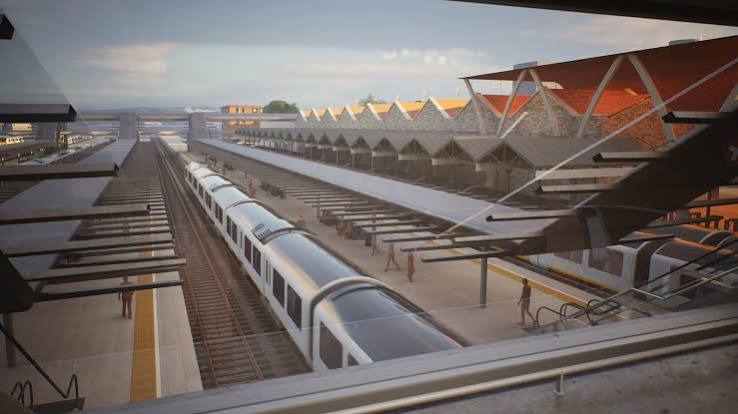
Kenya and the United Kingdom are stepping up efforts to secure financing for the Nairobi Railway City project, with financial closure targeted for early 2027 as the government prepares to transform Nairobi Central Railway Station into a major transport and commercial hub.
Kenya Railways is working with the National Treasury and UK Export Finance to finalise funding arrangements for the estimated Sh30 billion redevelopment, which will cover the central station and surrounding public spaces.
The corporation has completed procurement of the main Engineering, Procurement and Construction contractor and the supervising engineer for the new central station, moving the project closer to the construction stage.
The wider Railway City development is intended to integrate rail transport with commercial facilities, public spaces and other urban services. The project is expected to reshape the area around the station, which currently serves as a major connection point for commuter rail passengers and other public transport users.
A separate component, the Meetings, Incentives, Conferences and Exhibitions (MICE) Core development, is expected to include a multipurpose arena and commercial facilities. Construction is expected to begin in the coming weeks, according to the project update.
The distinction between the station redevelopment and the wider Railway City programme is important because the projects have separate components and implementation requirements. While contractor procurement has been completed for the central station, the wider programme still depends on the conclusion of financing arrangements.
The UK has been involved through discussions on financing and project support, including the role of UK Export Finance. A successful financial close would allow the government and its partners to move from planning and procurement towards full implementation.
For Nairobi businesses, the development could create opportunities in construction, engineering, property, hospitality, retail and conference services. The proposed transport and commercial integration could also increase activity around the central business district.
However, the early 2027 target remains a financing milestone rather than a guarantee that the entire project will be completed by that date. The pace of construction will depend on the final funding agreements, project sequencing and delivery of the different components.