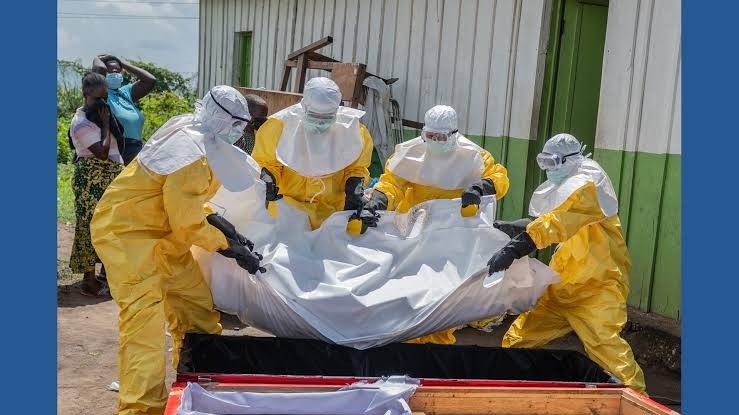
Amnesty International has accused the South Sudanese government and United Nations peacekeepers of failing to take adequate measures to prevent the killing of more than 200 people during an attack on Abiemnom town in March 2026, despite receiving warnings of an impending assault.
In a report titled The Abiemnom Massacre: Inaction and Impunity in South Sudan, the human rights organisation says at least 213 people were killed and 109 others injured when armed men attacked the town in the Ruweng Administrative Area on March 1, 2026.
The attack, which lasted approximately four hours, involved an estimated 1,000 to 1,500 armed men from Mayom County in neighbouring Unity State, according to Amnesty International's findings.
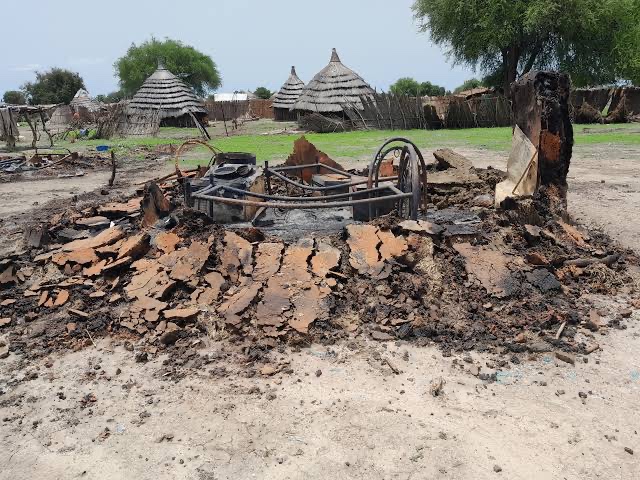
The assailants reportedly moved through the town, attacking residents, looting property and setting homes, shops and market structures on fire. The assault also affected health facilities, with the attackers reportedly ransacking the local hospital.
Amnesty International says the scale and coordination of the attack point to extensive preparation, with the attackers mobilising in large numbers and carrying firearms and other weapons.
The organisation based its findings on 82 interviews, including 76 conducted in person with survivors, as well as remote interviews with other witnesses and people familiar with the events.
Researchers also reviewed official statements, reports from the United Nations and other organisations, media coverage, satellite imagery and publicly available photographs and videos.
The report identifies several warning signs that emerged in the weeks leading up to the attack, raising questions about why authorities and the United Nations Mission in South Sudan (UNMISS) did not do more to protect residents.
According to Amnesty International, the Unity State government had received intelligence about a possible threat to Abiemnom. UNMISS also acknowledged that it had been aware of rising tensions in the area from February 14, 2026.
Two community leaders interviewed by the organisation said residents in Abiemnom had received warnings from relatives and acquaintances in Mayom town that an attack was being planned.
The warnings reportedly followed the mobilisation of young men and the organisation of firearms and ammunition.
The tensions were linked to the reported killing of two Bul Nuer individuals by suspected armed elements from Abiemnom in Panthiok, an area bordering Mayom County.
UNMISS said it had urged state and local authorities to take preventive action and highlighted the need to deploy additional security personnel to Abiemnom to deter possible violence.
The mission also confirmed that tensions had escalated towards the end of February, with residents seeking protection near its temporary operating base before the attack.
Amnesty International says the warnings should have prompted stronger preventive measures, particularly given the scale of the armed mobilisation and the vulnerability of civilians in the area.
The report also questions the adequacy of UNMISS's response, noting that its military contingent in Abiemnom had been reduced from 74 personnel to 44 by February 27, 2026.
The reduction was linked to wider United Nations cost-cutting measures and preparations for the mission's transition and closure activities.
Amnesty International argues that the reduced presence limited the mission's ability to conduct night patrols and respond effectively to emerging security threats.
UNMISS told Amnesty International that it had engaged the authorities, sought additional security deployments and established a Temporary Protective Area to safeguard civilians.
The mission also said it briefly opened its gates during the attack, allowing more than 1,000 civilians to seek refuge. After the assault, it deployed 40 Formed Police Unit personnel to the area.
However, Amnesty International questioned why additional personnel were not deployed before the attack, when the threats had already become apparent.
It called on UNMISS to provide a transparent account of the decisions taken before and during the assault.
The organisation also documented the deaths of women and children, including a 10-year-old girl and a 19-year-old mother of two.
It said seven people were killed outside the rear gate of the UNMISS base near the airstrip.
The report highlights the extensive displacement caused by the violence, with thousands of residents fleeing Abiemnom and seeking refuge in neighbouring areas.
The International Organization for Migration initially recorded 3,148 people seeking shelter at the UNMISS base, while subsequent humanitarian assessments documented thousands more displaced to Twic and Gogrial West, as well as Abyei Youth Centre, Agok and Juoljok.
The displaced faced difficult conditions, including inadequate shelter, limited access to clean water and poor sanitation.
Many depended on assistance from host communities, churches and local organisations.
Although some residents had returned to Abiemnom by September 2026, Amnesty International said many survivors remained unwilling to go back without concrete guarantees of their safety.
The organisation also examined the question of responsibility for the attack, which has remained contested.
Officials from the Ruweng Administrative Area and Unity State, alongside members of the Padang community, initially accused the Sudan People's Liberation Movement-in-Opposition (SPLM/A-IO) of involvement.
The group denied responsibility.
Community leaders interviewed by Amnesty International disputed the accusation, identifying armed men from Mayom County and members of the Terchuong militia as the attackers.
UNMISS also attributed the assault to Bul Nuer armed elements from Mayom County, specifically the Terchuong militia.
Some community leaders further alleged that the attackers had received support from senior political and military officials in Unity State.
However, Amnesty International's report does not establish the alleged involvement of those officials.
The organisation says the violence was rooted in longstanding intercommunal tensions, unresolved grievances and cycles of revenge, with the immediate trigger reportedly linked to the killing of young men from Mayom in February 2026.
Amnesty International also warns that the failure to hold perpetrators accountable for an earlier attack in April 2025 may have contributed to a climate of impunity that enabled the March 2026 massacre.
The organisation says it found no evidence of meaningful investigations or arrests relating to the earlier assault, raising concerns that perpetrators may have been encouraged by the absence of consequences.
In its report, Amnesty International says the South Sudanese authorities have a responsibility to investigate the killings and ensure that those suspected of criminal responsibility are brought before independent courts.
The organisation said it wrote to the Inspector General of Police, the Minister of Justice and Constitutional Affairs and the Chief of Defence Forces on June 17, 2026, seeking information about the attack and measures taken to prevent it. It said it received no responses.
It also sought information from UNMISS about its actions before and during the assault, including whether written contingency plans had been in place.
The organisation said it did not receive a substantive response to its subsequent requests.
Amnesty International is calling for an independent, impartial and thorough investigation into the massacre, with findings made public.
It wants those suspected of criminal responsibility to face fair trials without the death penalty.
The organisation has also urged the authorities to ensure the protection of witnesses and preserve evidence, while calling for international forensic expertise where necessary.
It further wants the government and humanitarian agencies to support survivors, particularly families who lost their homes, businesses and breadwinners, as they attempt to rebuild their lives.
For many survivors, Amnesty International says, accountability is central to preventing a repeat of the violence.
Others have called for stronger protection by national security forces and UNMISS, as well as reconciliation efforts and agreements between community leaders that guarantee civilian safety.
The organisation says the failure to protect Abiemnom's residents reflects a wider and longstanding problem in South Sudan, where civilians continue to face violence amid persistent insecurity and limited accountability.