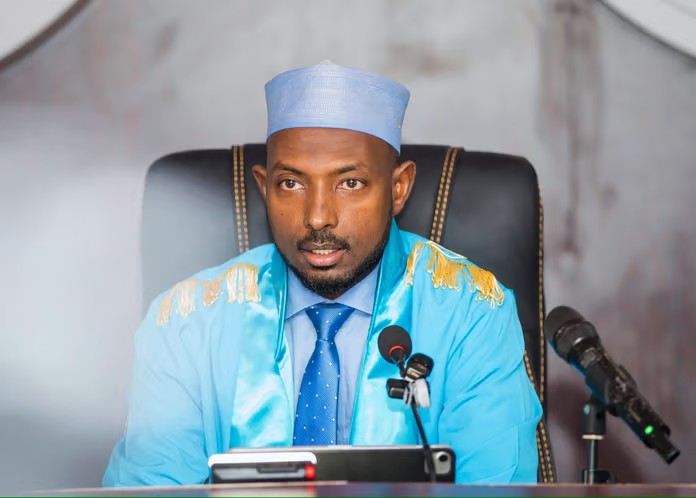
United Nations (UN) human rights experts have condemned the dismissal of Somalia's Chief Justice, Bashe Yusuf Ahmed, describing the move as unlawful and a serious threat to judicial independence and the rule of law.
The experts also criticised President Hassan Sheikh Mohamud's government for swearing in a replacement just three days after Ahmed's removal, without following the constitutional procedures required for appointing a new Chief Justice.
Ahmed was dismissed through a presidential decree on November 4, 2026. On November 7, Ibrahim Idle Suleiman was sworn in as his replacement in a ceremony attended by the President.
In a statement, the UN experts said the removal of Ahmed did not follow constitutional requirements, which include parliamentary approval and a proposal from the Judicial Service Commission.
They warned that the dismissal and the subsequent appointment of a replacement undermined the independence of the judiciary and weakened public confidence in the country's legal institutions.
The dispute comes amid growing tensions between the Somali government and the Supreme Court over recent constitutional changes extending the terms of the President and Parliament from four years to five years.
Ahmed's removal came just a day before the Supreme Court was expected to rule on the legality of the term extensions.
However, on November 5, five Supreme Court judges proceeded with the case and ruled that the extensions were unconstitutional. They declared that the terms of both the President and Parliament had expired and ordered that elections be held within 90 days.
The judges also ruled that the dismissal of Ahmed was unconstitutional, arguing that the move was intended to interfere with the court's consideration of the dispute over the extended presidential and parliamentary terms.
The Somali government reportedly refused to comply with the court's orders and instead deployed hundreds of security officers to the Supreme Court, raising concerns about intimidation and interference with judicial proceedings.
The UN experts further revealed that seven Supreme Court judges had their personal security protection withdrawn despite the security risks they faced. The judges were also reportedly barred from travelling.
They called on the government to immediately restore the judges' security protection and urged security forces to withdraw from the court.
"We strongly condemn this blatant interference with the independence of the judiciary," the experts said, warning that threats against judges could undermine the country's constitutional order.
They stressed that judges must be allowed to make decisions independently without pressure, threats or interference from political leaders or other government institutions.
The experts also pointed out that international, African and Somali laws require governments to protect judicial independence, particularly when courts are handling politically sensitive disputes.
Under international standards, judges can only be suspended or removed for reasons related to their ability to perform their duties or misconduct that makes them unfit to serve. Any removal must follow fair procedures and allow for independent review.
The UN experts further recalled previous concerns about Somalia's constitutional reform process and the lack of an independent judiciary.
They warned that weaknesses in the country's justice system could also affect its efforts to tackle insecurity and stabilise the country, particularly as it continues to face threats from the Al-Shabaab militant group.
The experts insisted that Ahmed remains the lawfully appointed Chief Justice and should be immediately restored to office.
They also called on the Somali government to guarantee the safety and independence of all Supreme Court judges, warning that political interference in the judiciary threatens democracy and the rule of law.