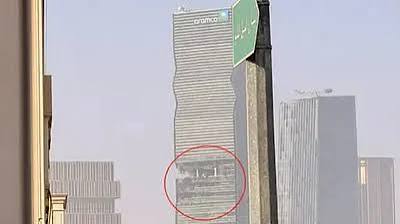
A Saudi Aramco administrative building in Riyadh's King Abdullah Financial District sustained damage on Sunday, November 8, after Saudi air defences intercepted missiles launched towards the capital, raising fresh concerns over the widening Middle East conflict and threats to the kingdom's energy infrastructure.
Saudi Arabia's Ministry of Energy confirmed that falling shrapnel damaged the building, describing the impact as limited and reporting no injuries or fatalities.
The tower, located in the high-profile King Abdullah Financial District, is among the prominent commercial buildings in the Saudi capital. A Reuters witness reported seeing shattered windows across several floors following the incident.
The damage occurred after Saudi air defences intercepted two ballistic missiles launched towards Riyadh, according to the Saudi-led coalition fighting Yemen's Houthi movement. The coalition also reported intercepting cruise missiles targeting Riyadh and other parts of the kingdom.
Multiple loud explosions were heard in the capital after civil defence authorities issued an early-warning alert. Officials later announced that the immediate danger had passed.
The Houthis, an Iran-aligned armed group based in Yemen, have intensified missile and drone attacks against Saudi targets since fighting escalated in the region. The group has previously targeted airports, ports, oil facilities and other strategic infrastructure.
The latest incident comes amid renewed hostilities between Saudi Arabia and the Houthis following the collapse of a ceasefire that had largely contained the conflict since 2022.
Saudi Arabia has also carried out airstrikes against Houthi targets in Yemen. The escalation has raised concerns about the security of the kingdom's energy facilities and the potential consequences for international oil markets.
Saudi Aramco, the world's largest oil exporter, operates critical production, processing and export infrastructure across the kingdom. Any sustained disruption to its operations could have implications for global crude supply, particularly as geopolitical tensions continue to threaten energy infrastructure and shipping routes in the region.
The latest damage, however, was reported at an administrative building in Riyadh, and there was no immediate indication that oil production or exports had been affected.
The incident also follows an earlier attack on Riyadh's King Khalid International Airport on October 10, which Saudi authorities said killed 13 people and injured more than 300.
For Saudi Arabia, the latest attack demonstrates how the conflict is increasingly reaching beyond border areas and military installations into the kingdom's commercial centres.
The government has not reported any casualties from Sunday's incident, while the coalition continues to monitor and intercept incoming threats.