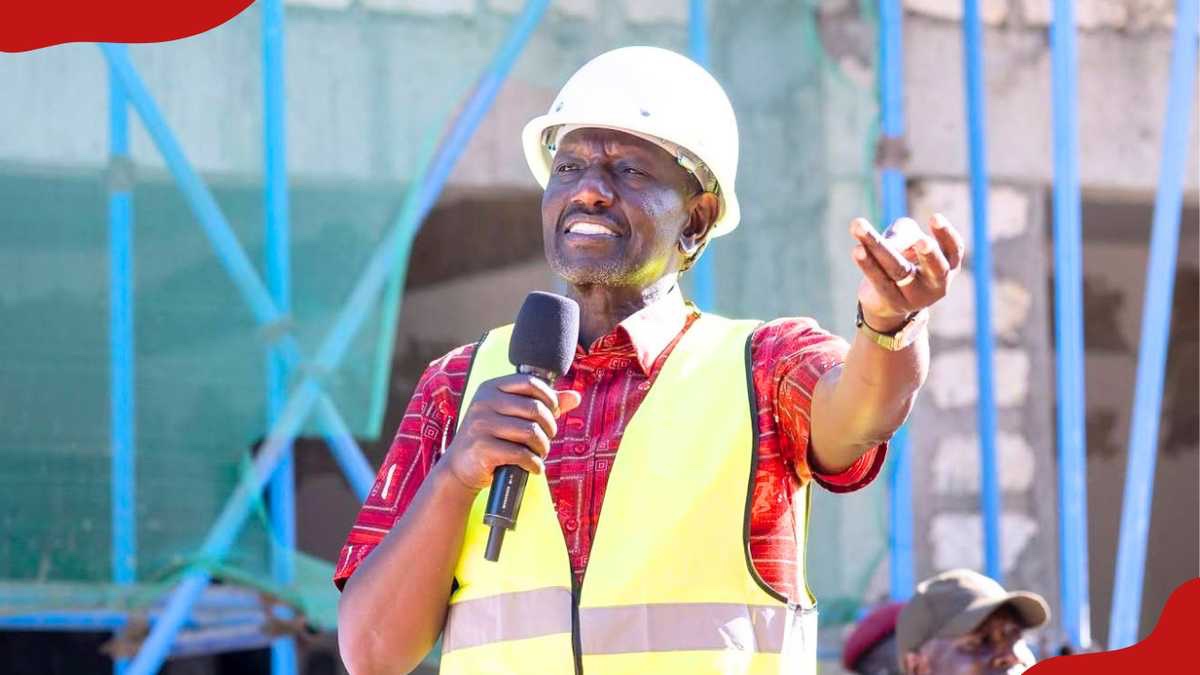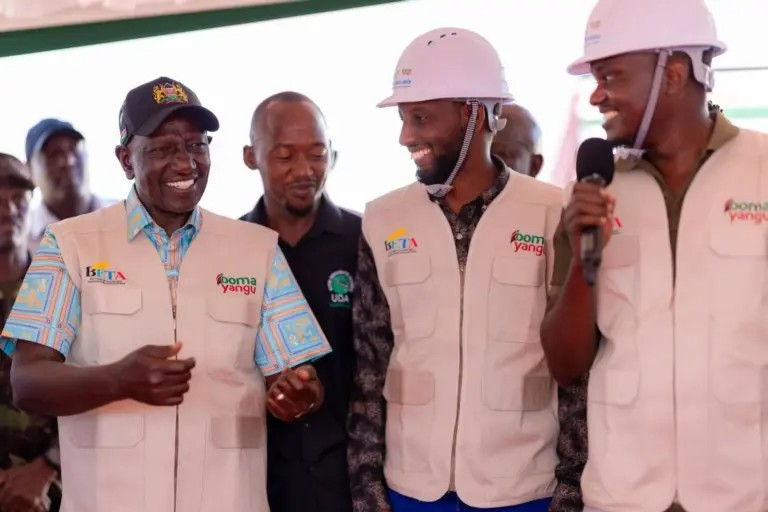
President William Ruto has broken ground for a KSh70 billion cement and clinker factory in Kitui County, with the project expected to create 4,000 jobs and expand Kenya’s domestic production capacity for construction materials.
The facility, being developed by Devki Group in Ngaaie, Mwingi North, will be the county’s first cement manufacturing plant. The investment is intended to utilise locally available limestone deposits while creating employment and business opportunities in the surrounding communities.
Speaking during the groundbreaking ceremony on Tuesday, October 27, Ruto said the project would help reduce reliance on imported clinker, retain more economic value within Kenya and strengthen the country’s manufacturing sector.
“By producing clinker locally, we retain more value within our economy, create skilled jobs, build technical expertise, strengthen our industrial capacity, and create wealth in Kenya,” Ruto said.
The expected 4,000 jobs were reported in coverage of the project by The Star and other outlets, although the President’s prepared remarks did not specify the employment figure.
The investment comes as Kenya’s cement industry records increased production amid growing demand for construction materials.
Ruto said cement production rose from 8.85 million tonnes in 2024 to 10.44 million tonnes in 2025, representing an 18 per cent increase.
Production reached 7.62 million tonnes in the first eight months of 2026, compared with 6.68 million tonnes during the corresponding period in 2025, representing growth of approximately 14 per cent.
The President said the government introduced the Export and Investment Promotion Levy on imported clinker in 2023 to encourage domestic manufacturing and attract investment into the sector.
He also announced plans to break ground for Bamburi Cement’s expansion in Matuga, Kwale County, in approximately three weeks. The proposed clinker plant is expected to have a production capacity of 5,000 tonnes per day.
Ruto previously commissioned Devki’s clinker plant in Sebit, West Pokot, in April 2024. That facility has a daily production capacity of 6,000 tonnes.
The Kitui project is also expected to serve demand generated by the government’s housing and infrastructure programmes.
Ruto said 303,910 homes were at various stages of development under the government’s housing programme, alongside investments in markets and student accommodation.
He further cited the proposed Dangote refinery in Lamu, whose construction is expected to require more than two million tonnes of cement, as another source of demand for locally manufactured construction materials.
Devki Group Executive Chairman Narendra Raval said the company had been planning to establish the factory for about 10 years, citing the limestone deposits in Ngaaie as a key reason for selecting the location.
Raval said previous attempts by cement and building-material companies to establish a plant in the area had been made because of the availability of limestone.
Beyond direct employment, Ruto urged Devki to work with technical and vocational training institutions to establish apprenticeships and practical training programmes for young people.
He also called on the company to provide local transporters, maintenance firms, food suppliers and traders with opportunities to supply goods and services to the facility.
The President said the project should benefit surrounding communities through employment, skills development and business opportunities while maintaining safe workplaces, responsible water use, effective dust control and rehabilitation of mined land.
The factory forms part of the government’s broader industrialisation agenda, which seeks to expand domestic production, strengthen local supply chains and position Kenyan manufacturers to compete in regional and international markets.