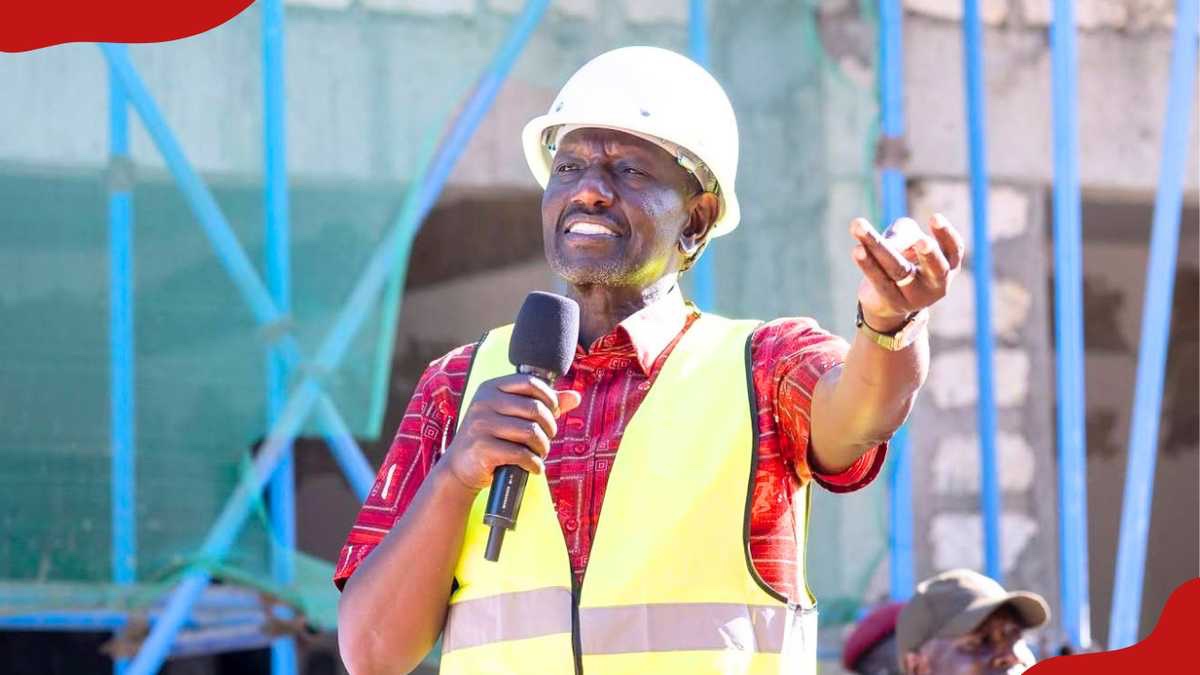
President William Ruto is set to oversee the launch of several development projects in Kitui and Machakos counties on Tuesday, October 27, 2026, as he concludes his four-day tour of the Ukambani region.
The President’s programme includes the groundbreaking ceremony for a clinker cement factory in Ngaaie, Mwingi North Constituency, Kitui County, alongside road construction, electricity connectivity and healthcare training infrastructure projects in Machakos County.
The proposed cement factory, being developed by Devki Group, is expected to attract significant investment to the region.
According to reports, the project is valued at approximately KSh70 billion and is expected to create about 4,000 jobs, providing employment opportunities and stimulating local businesses.
The factory will manufacture clinker, a key raw material used in cement production, using locally available resources.
In Machakos County, Ruto will travel to Kithyoko in Masinga Constituency, where he is scheduled to flag off the Last Mile Electricity Connectivity Project.
The initiative is intended to expand access to electricity for households and businesses, particularly in areas that remain underserved.
He will also launch construction of the Kagonde-Masinga-Kithyoko Road, which is expected to improve transport links and ease movement between communities, trading centres and markets.
The President’s itinerary will then take him to Matuu in Yatta Constituency, where he is scheduled to commission the Kenya Medical Training College (KMTC) campus.
The institution is expected to strengthen access to medical training and help prepare more healthcare workers to serve communities in Kenya.
Ruto will also launch the Matuu-Kyasioni-Katangi Road, another infrastructure project aimed at improving connectivity in the area.
The activities form part of the President’s wider development tour of Ukambani, which has included projects targeting roads, water supply, electricity access, housing and education across Kitui, Machakos and Makueni counties.
The administration has maintained that the investments are intended to promote economic growth, improve public services and expand development opportunities across the country.