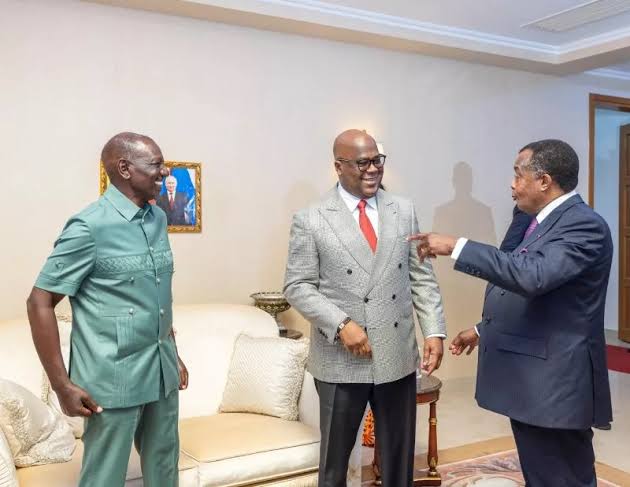
Presidents William Ruto of Kenya and Félix Tshisekedi of the Democratic Republic of Congo agreed on November 22, 2026, to restore full diplomatic relations after nearly three years of strained ties. The agreement was reached at a quadripartite summit in Oyo, Republic of Congo, hosted by President Denis Sassou-N’Guesso. The two leaders also pledged to expand trade, security and cultural cooperation.
The meeting was the first time Ruto and Tshisekedi had met face to face since relations between Nairobi and Kinshasa soured nearly three years ago. The two countries had been left without fully functioning ambassadorial representation, which limited diplomatic contact and slowed bilateral engagement. Both leaders said they would work toward full restoration of those missions.
The summit brought together four leaders. Togo’s President of the Council of Ministers, Faure Gnassingbé, who serves as the African Union-appointed mediator in the crisis in eastern DRC, joined Ruto, Tshisekedi and Sassou-N’Guesso.
Ruto arrived in Oyo on November 21, and Tshisekedi arrived on the morning of the summit. Congolese authorities said the meeting focused on peace and security in the Great Lakes region.
The summit’s immediate result is political rather than commercial. The leaders committed to rebuilding trust and expanding cooperation across several sectors, including trade, but no specific trade targets, investment deals or agreements were announced in the reports reviewed. Business will look to the follow-up for measures that turn the pledge into commerce.
Trade is the natural next step. Kenya is a major exporter of goods and services in East Africa, and DRC is a large and growing market in the region. Kenyan banks have also expanded heavily into DRC, where they now hold a significant share of banking assets, so the restored relationship matters for financial services as well as goods.
The timing reflects regional diplomacy. The summit came as the crisis in eastern DRC and the wider Great Lakes peace effort remain central to African diplomacy. Gnassingbé’s role as AU mediator gave the meeting added weight and the presence of Congo-Brazzaville’s president reflects the region’s push to resolve the conflict through dialogue.
Kenya’s diplomats are expected to move quickly on the practical steps. Restoring ambassadorial representation would allow the two governments to coordinate on trade, investment, security and consular matters, which have been difficult to manage without functioning missions in each other’s capitals.
Some questions remain open. The reports do not say how quickly ambassadors will be named or whether the countries will set up joint trade or investment bodies. They also do not explain what caused the strain, which the leaders did not spell out in public statements.
The next signals will be the appointment of ambassadors, any joint commission or working group on trade, and whether the commitment to cooperation produces concrete agreements in the coming months. Traders, investors and regional observers will be watching how quickly the reset moves from statements to practice.