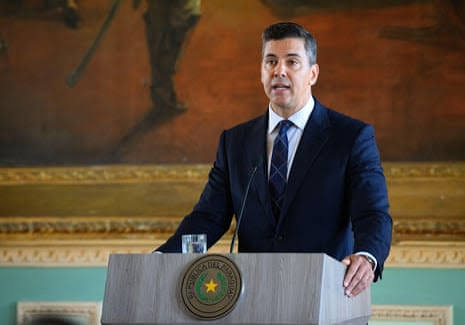
Former Paraguayan President Santiago Peña has been placed in pre-trial detention and had his assets frozen following the collapse of Ueno Bank, a major digital lender whose failure has triggered a political crisis and left millions of customers struggling to access their money.
A judge ordered Peña's detention on Saturday, November 7, a day after the Senate removed him from office through impeachment proceedings. Prosecutors charged him with breach of trust and administration for personal gain, offences that could each carry prison sentences of up to 10 years.
The former president, who was in office from 2023 until his removal, is accused of using his influence to keep large amounts of government money deposited at Ueno despite his financial connections to the bank's parent company.
Peña held shares in Ueno Holding until March 2025, according to Reuters. Investigators allege that he influenced decisions by public agencies and state-owned entities to direct or retain government funds at the lender, creating a conflict of interest.
The judge also ordered the freezing of Peña's assets and those of former central bank governor Carlos Carvallo, who previously headed Ueno Bank. Carvallo faces additional allegations, including producing false public documents.
Peña has denied wrongdoing. His lawyer, Ricardo Preda, said the former president had pleaded not guilty and would cooperate with the investigation, expressing confidence that the case would eventually be dismissed.
The scandal erupted after Paraguay's central bank intervened in Ueno earlier in the week, citing a severe breach of minimum solvency requirements. The regulator found that the bank's financial position had deteriorated to less than half the legally required solvency level.
Ueno had grown into one of Paraguay's largest digital banking institutions, serving approximately three million customers in a country of 6.5 million people. It also held more than $800 million in government funds, according to reports.
The collapse disrupted access to savings and payments, triggering protests in the capital, Asunción, as customers demanded the return of their money.
The central bank said it had paid approximately $160 million to nearly 1.2 million savers through the country's deposit guarantee scheme by Saturday. However, the payments have not resolved concerns among customers whose deposits remain inaccessible.
Peña's removal followed an extraordinary political reversal. He initially offered to resign on Thursday, but lawmakers proceeded with impeachment rather than accepting his departure, ensuring that he lost the immunity associated with the presidency.
Vice President Pedro Alliana was sworn in to complete the remainder of Peña's term, which runs until August 2028.
The crisis has raised questions about the oversight of rapidly expanding digital lenders, the handling of public deposits and potential conflicts of interest between political leaders and financial institutions.
For Paraguay, the immediate challenge is restoring public confidence in its banking system while investigators establish whether political influence contributed to Ueno's collapse.