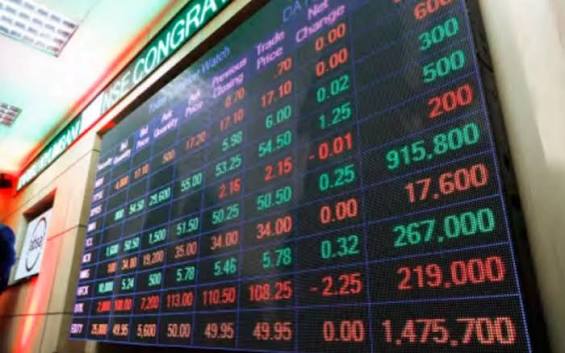
The Nairobi Securities Exchange (NSE) has extended its losing streak to four consecutive weeks, wiping out approximately KSh 93.72 billion in market capitalisation as investors reassess share valuations amid economic uncertainty and shifting investment opportunities.
The latest decline comes as the Kenyan stock market experiences contrasting developments, including large block trades, continued interest in government securities and plans by companies such as Quickmart to raise capital through the exchange. Investors are weighing the potential returns from equities against the relatively predictable income available from Treasury bills and bonds.
The market downturn has affected investor sentiment even as Kenya’s capital markets have recorded important milestones. The NSE’s market capitalisation crossed KSh 4 trillion in the third quarter of 2026, reaching approximately KSh 4.12 trillion in September, according to the Capital Markets Authority’s quarterly statistical bulletin. That was a 9.57% increase from June.
However, trading activity weakened sharply during the same period. Equity turnover fell 72.44% to KSh 72.72 billion in the third quarter, compared with KSh 263.87 billion in the second quarter, while the volume of shares traded declined 75.74% to 1.87 billion shares.
Recent market data also showed pressure on the Nairobi All Share Index. The index declined 4.56% in the week to October 22, while the NSE 25 fell 0.51% and the NSE 20 declined 0.39%, according to the Central Bank of Kenya’s weekly bulletin.
The market has nevertheless recorded substantial transactions. A KSh 42.5 billion block trade involving approximately 4.5 billion Kenya Pipeline Company shares was executed on October 19 as Dangote-linked interests acquired a 24.76% stake from public investment institutions. The transaction significantly increased reported equity turnover but did not prevent the broader market from experiencing losses.
The distinction is important because the value of shares traded measures transaction activity, while market capitalisation reflects the combined market value of listed companies. A large transaction can therefore boost turnover without reversing declines in share prices elsewhere.
Investors are also monitoring inflation, fuel costs, currency movements and interest-rate expectations. Rising inflation can reduce the real returns investors receive from financial assets, while higher expected interest rates may make fixed-income securities more attractive relative to equities.
The upcoming Quickmart initial public offering could provide a fresh investment opportunity and broaden the range of companies available to NSE investors. However, its eventual impact will depend on investor demand and the performance of the retailer after listing.
The market’s next direction will depend on corporate earnings, economic conditions and investor appetite for risk. Sustained recovery would require improved confidence and trading participation rather than isolated high-value transactions.