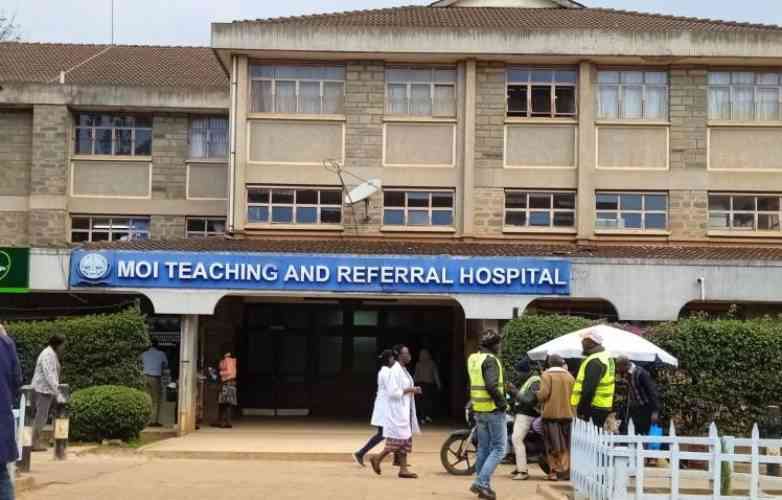
Moi Teaching and Referral Hospital (MTRH) in Eldoret has isolated one person for a 21-day Ebola monitoring period, with Chief Executive Officer Dr Philip Kirwa assuring the public that the precautionary measure does not mean the individual is infected.
In a statement, Kirwa said the hospital had no Ebola-infected patients under its care and urged the public not to confuse quarantine with a confirmed diagnosis.
“We have no Ebola-infected patients. Quarantine is not equal to an infected person,” Kirwa said.
He explained that people who may have been exposed to the virus are monitored for symptoms during the incubation period.
The individual will remain under observation for 21 days and be released if no symptoms develop during that period.
The monitoring comes as Kenya continues contact tracing and surveillance following an Ebola outbreak involving the Bundibugyo virus strain.
Health authorities have been tracking people who may have come into contact with confirmed cases to identify any infections early and prevent further transmission.
In a report on Wednesday, October 21, a previously unaccounted-for contact linked to Kenya’s first Ebola case had been traced and placed in quarantine at MTRH. However, the report did not establish whether that person is the individual referred to in Kirwa’s latest statement.
Kenya confirmed its first imported Ebola case in early October involving a Kenyan man who had lived in the Democratic Republic of Congo and travelled through Uganda before arriving in Nairobi. The patient subsequently died, prompting health authorities to launch contact tracing and enhanced screening measures.
The Ministry of Health has identified MTRH as one of five designated facilities for Ebola isolation and management.
In an update published on October 7, the ministry said the Eldoret-based referral hospital had a capacity of 50 beds for managing Ebola cases.
Other designated facilities include Kenyatta National Hospital, the National Police Service Hospital, Port Reitz Hospital and Nairobi Hospital.
The government has also strengthened screening at airports and land border crossings, particularly for travellers arriving from countries considered at higher risk of Ebola exposure.
Contact tracing teams have been working to locate people who may have been exposed to infected individuals and ensure they complete the required monitoring period.
The 21-day monitoring period reflects the maximum recognised incubation period for Ebola virus disease. People who have been exposed may not develop symptoms immediately, making follow-up essential for detecting possible infections.
Ebola spreads primarily through direct contact with the blood or bodily fluids of an infected person, or contaminated materials. It does not spread through the air in the manner of common respiratory infections.
The hospital has previously said it strengthened infection prevention protocols, surveillance systems and staff training following confirmation of Kenya’s first case, assuring the public that it was prepared to identify and safely manage suspected infections.
Kirwa urged the public to remain calm and rely on official health information as surveillance and preparedness measures continue.
He emphasised that precautionary isolation should not be interpreted as proof that an individual has contracted the disease.