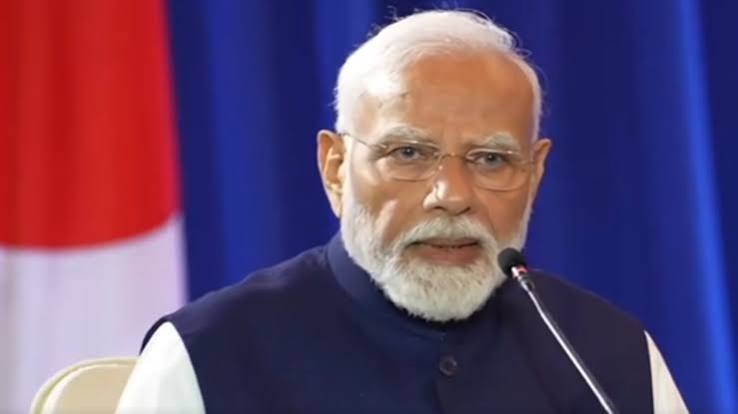
Indian Prime Minister Narendra Modi has challenged manufacturers to stop offering different quality standards to domestic and international customers, warning that the country's 1.4 billion consumers should not be taken for granted.
Speaking at the centenary convention of the Federation of Indian Chambers of Commerce and Industry (FICCI) in New Delhi on Thursday, November 19, Modi questioned why businesses continued to use the label "export quality" to convince Indian consumers that a product meets high standards.
He argued that India's large population should encourage companies to improve their products rather than make them complacent about competition.
"Do not consider 140 crore Indians merely as an assured market," Modi told industry leaders, adding that Indian consumers deserved quality goods.
The Prime Minister said businesses had developed a mindset that their products would sell regardless of quality because customers could always be found in the country's large cities, smaller towns and villages.
He urged manufacturers to make the domestic market a foundation for competing internationally instead of treating it as a comfortable destination where products of any standard could find buyers.
The remarks come as India seeks to expand its manufacturing base, increase exports and reduce reliance on imported industrial inputs. Modi encouraged companies to take advantage of trade agreements signed with major economies, arguing that improved access to international markets would create opportunities for businesses prepared to meet global standards.
He also identified areas where Indian manufacturers could increase domestic production and reduce import dependence.
In pharmaceuticals, he called for greater investment in active pharmaceutical ingredients, bulk drugs and drug intermediates, despite India's established position as a major producer of finished medicines.
He also pointed to specialised steel and aluminium products, food processing, agricultural machinery, hand tools and industrial equipment as areas with opportunities for investment and export growth.
Modi said India's share of global agricultural exports remained relatively small at around 2% to 2.5%, urging companies to invest in food processing and develop products suited to overseas markets.
The Prime Minister also challenged businesses to translate government reforms and tax relief into higher wages and more employment, questioning whether companies had done enough to increase investment and hiring.
His message places greater responsibility on Indian manufacturers to improve product standards, strengthen domestic supply chains and compete for international customers as the country pursues its ambition of becoming a developed economy by 2047.
However, the speech was a call for higher standards rather than evidence that all Indian companies systematically sell inferior products at home compared with exports.