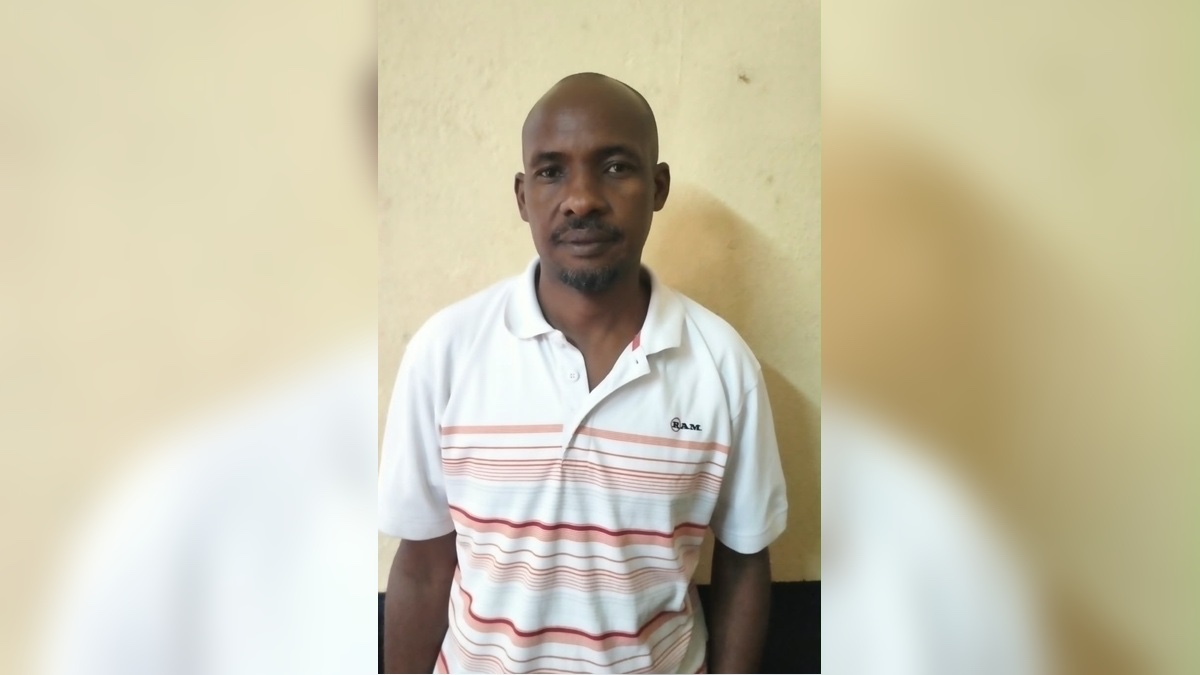
Detectives have arrested a man accused of spending Sh6.7 million that was mistakenly deposited into his bank account during a company’s electronic payment transactions.
The suspect, identified as Dickson Yiaile Sitei, was arrested on Saturday, October 24, 2026, along Lantana Road in Westlands, Nairobi, according to the Directorate of Criminal Investigations (DCI).
The case dates back to November 18, 2025, when a company was processing 74 electronic payments.
Among the transactions was a legitimate rent payment of Sh72,000 owed to Sitei for the company’s shop in Suswa.
However, an error during the payment process allegedly resulted in Sh6,744,354 intended for another company being credited to Sitei’s bank account alongside the rent payment.
According to the DCI, the company later sought to recover the money after discovering the error.
However, Sitei is accused of spending the funds instead of returning the amount that had been mistakenly transferred to his account.
The incident prompted an investigation by detectives from the Banking Fraud Investigation Unit (BFIU), who sought to establish the circumstances surrounding the transfer and the subsequent handling of the money.
After completing their investigations, detectives forwarded the case file to the Office of the Director of Public Prosecutions (ODPP) for review and directions on possible charges.
Following its review, the ODPP directed that Sitei be charged with intentionally withholding an erroneously delivered payment, contrary to Section 35 of the Computer Misuse and Cybercrimes Act, 2018.
He is also expected to face a money laundering charge under the Proceeds of Crime and Money Laundering Act.
Sitei remained in custody as of the DCI’s announcement while police completed the necessary procedures ahead of his arraignment in court.
The arrest has renewed attention on the legal implications of retaining money mistakenly deposited into a bank account, particularly when the recipient becomes aware of the error.
The DCI has warned members of the public that funds received in error do not automatically become the property of the account holder, even when the money is accessible for withdrawal or spending.
The agency cautioned that individuals who deliberately retain or spend money mistakenly credited to their accounts risk facing criminal charges.
Members of the public are advised to notify their banks and follow the appropriate procedures when they receive unexpected deposits rather than spending the money.