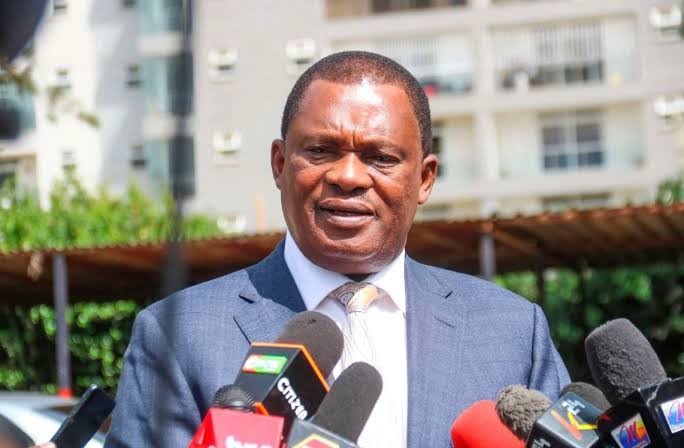
Education Cabinet Secretary Julius Migos Ogamba is expected to witness the opening of the Kenya National Examinations Council (KNEC) examination container in Makindu, Makueni County, on Monday as more than 2.4 million learners begin the 2026 Kenya Primary School Education Assessment (KPSEA) and Kenya Junior School Education Assessment (KJSEA).
Ogamba will oversee the opening of the examination container at the Makindu Sub-County Deputy County Commissioner’s office from 5:45 a.m. before visiting Kiambani Comprehensive School to observe the administration of the two assessments.
According to KNEC, a total of 1,298,089 Grade 6 learners are expected to sit the KPSEA, while 1,130,669 Grade 9 learners will undertake the KJSEA, bringing the combined number of candidates to 2,428,758.
The assessments are scheduled to begin at 8:30 a.m. on Monday, October 26, and will run for five days. Rehearsals were conducted on Friday, October 23, to familiarise candidates with examination procedures and guidelines ahead of the start of the assessments.
The opening of examination containers is a key step in the administration process, allowing examination materials to be accessed and distributed to designated centres under the supervision of authorised officials.
KNEC has urged teachers, examination officials and candidates to uphold integrity, transparency and professionalism throughout the assessment period.
The nationwide exercise marks another major milestone in Kenya’s transition from the 8-4-4 education system to the Competency-Based Curriculum (CBC), which combines national assessments with school-based evaluations to track learners’ progress.
The KPSEA is administered to learners at the end of Grade 6, while the KJSEA assesses learners at the end of Grade 9, a critical stage in their education as they prepare to transition to senior school.
Under the CBC framework, assessment is designed to measure learners’ knowledge, skills and competencies at different stages rather than relying solely on a single high-stakes examination at the end of primary or secondary school.
KNEC Chief Executive Officer David Njengere has previously expressed confidence in the council’s capacity to administer assessments under the new curriculum, noting that learners’ progression incorporates both school-based assessment and national examinations.
The Grade 9 assessment carries particular significance because its results contribute to decisions on learners’ progression to senior school. The process is therefore expected to attract close attention from parents, teachers and education stakeholders as the country implements the next phase of the CBC.
Ogamba’s visit to Makindu and Kiambani Comprehensive School will provide an opportunity to observe the opening of the examination container and the administration of the assessments as candidates across the country embark on the five-day exercise.
The Education Ministry and KNEC are expected to work with school administrators, teachers, security agencies and examination officials to support the orderly administration of the assessments and safeguard their credibility.