The Kenya Revenue Authority has excluded 11 product categories, including smartphones, watches, second-hand clothes, televisions and wooden, steel and aluminium doors, from its Sh2 million consolidated cargo clearance framework. The exclusions were set out in a public notice dated November 5, 2026. Importers of the affected goods must use the standard customs clearance procedures instead.
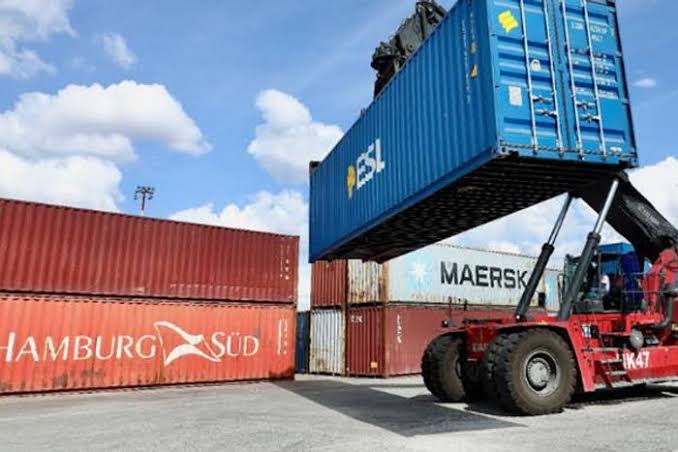
Consolidated cargo lets small traders share a single 40-foot container, with each importer’s goods declared together under one arrangement. The framework has been used by thousands of small importers, and it was designed to reduce shipping costs and speed up clearance for traders who cannot fill a container alone. A single container can hold goods from as many as 25 traders.
The notice goes further than the 11 outright bans. KRA also listed 19 categories that may still use the arrangement, but only where their combined volume does not exceed 5 percent of the shipment, measured in cubic metres. Taken together, the lists cover 30 categories, which makes the framework far narrower than before.
Smartphones were the main concern. KRA said high-value electronics were the most affected goods in cases of undervaluation and under-declaration, with traders declaring high-end phones as cheaper models to reduce customs value and tax.
The authority cited a recent case at Eldoret International Airport, where a consignment declared as 3,000 smartphones was found to contain 55,607 ordinary phones and 309 high-end models. KRA estimated the potential tax loss at Sh21.5 million.
The full list of excluded items is broad. It covers assorted foodstuffs, complete kitchens, designer-brand finished products, plant and machinery other than small agricultural equipment, sanitary ware and musical instruments, as well as the smartphones, watches, used clothing and footwear, doors and televisions named in the notice.
The rules were shaped by a dispute. Traders protested after KRA raised the minimum reference value for a consolidated 40-foot container by 28 percent, from Sh2.5 million to Sh3.2 million, in August. President William Ruto then cut the benchmark back to Sh2 million and directed KRA to publish a list of goods that would not qualify. The exclusion list is the outcome of that agreement.
Traders who import the excluded goods now face a different process. They can clear their goods individually, with customs verification based on the actual contents and customs value, rather than relying on the simplified consolidated route. That will add cost and time for small importers who depend on the arrangement.
The next signals will be how KRA enforces the 5 percent cap on the 19 conditional categories, whether traders challenge the exclusions in court, and whether the list is revised. Small importers and freight forwarders will be watching for changes to clearance times and costs at the Inland Container Depot.