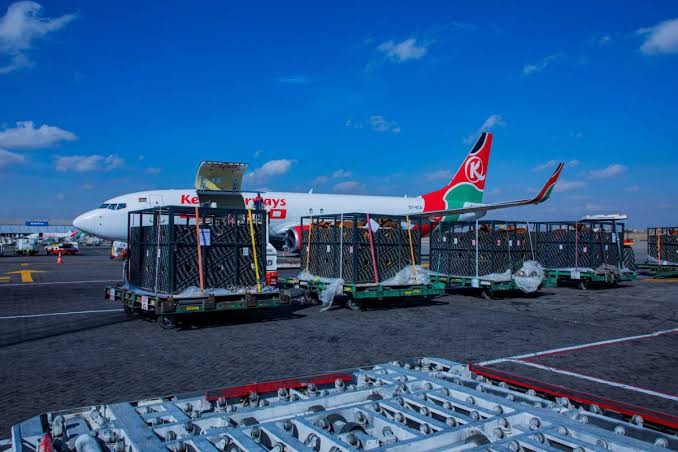
Kenya Airways Cargo has completed its first shipment of live cattle from Kenya to Nigeria, flying more than 50 animals from Nairobi to Lagos on a dedicated cargo charter on Tuesday, October 27, 2026, in a move that extends the airline’s specialised freight offering.
The flight left Jomo Kenyatta International Airport (JKIA) and landed at Murtala Muhammed International Airport in Lagos. It was operated with a Boeing 737-800 freighter, registered 5Y-KCA, and handled under the airline’s “KQ Live” product, which carries live animals using procedures designed to support their welfare during transit, including temperature regulation and ventilation. The airline said the operation involved tailored logistics planning, close coordination and adherence to applicable animal transport regulations.
Kenya Airways Cargo Director Fitsum Abadi said live animal shipments call for meticulous planning, specialised handling and close coordination throughout the journey. He said the successful flight shows the airline can respond to complex and specialised cargo needs across the continent, and that it reinforces its commitment to supporting intra-African trade through flexible and reliable cargo solutions.
The charter links East and West Africa, where demand for livestock and other time-sensitive goods that need controlled handling is strong. The airline said it sees air cargo as a way to support trade between the two regions, though it has not given details on who owned the animals or what they were worth.
The shipment is part of a broader push to diversify the carrier’s revenue. Kenya Airways has been repositioning its cargo arm as a core part of its strategy, moving beyond conventional freight into higher-value niches including pharmaceuticals, perishables, dangerous goods, live animals and e-commerce.
The airline says the expansion will help diversify cargo revenue, increase earnings from specialised freight and strengthen Nairobi’s role as a regional logistics hub. It expects additional wide-body aircraft capacity and strategic partnerships to support its wider cargo ambitions.
The airline has not said whether it plans regular live animal flights or larger shipments. Analysts say the maiden operation works as a proof of concept, since livestock exports by air need reliable veterinary certification, handling facilities at both ends and enough demand to fill flights regularly.