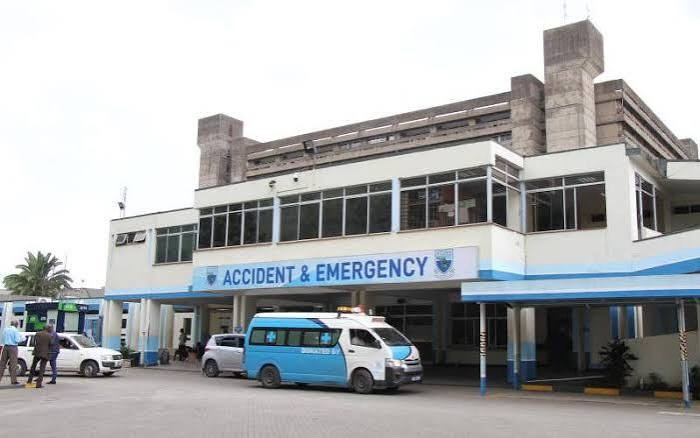
Kenyatta National Hospital (KNH) has made medical history after successfully performing Africa’s first-ever tubeless tracheal reconstruction, a specialised surgical procedure aimed at repairing the windpipe without using a conventional breathing tube that would obstruct the surgical field.
In a press release issued on Friday, October 16, 2026, KNH said the five-hour operation was performed on September 24 at the hospital’s Prime Care Centre on 26-year-old Dennis Kaiser Omondi, who had experienced breathing difficulties for nearly two decades.
The procedure was led by Dr Joseph Mutie, a consultant cardiothoracic and vascular surgeon, working alongside Dr Ruel Maina, an ear, nose and throat specialist, and Dr Caroline Abuya, a consultant anaesthesiologist and intensivist.
Overview of the surgical procedure
According to the hospital, Omondi was diagnosed with a benign adenoma, a non-cancerous growth, in his windpipe in 2008.
Subsequent medical investigations revealed a narrowing of the trachea, which restricted airflow, as well as an abnormal opening between the windpipe and the skin of his neck. The conditions affected his breathing, voice and ability to carry out everyday activities.
During the operation, the surgical team adopted a tubeless technique that allowed them to work without a conventional breathing tube in the surgical field. This provided the surgeons with a clearer view of the affected area and better access to the windpipe.
The technique also enabled the team to use a bronchoscope, a small camera inserted into the airway, to identify the affected sections and ensure that only the diseased parts of the windpipe were removed.
KNH said the approach required careful planning and close coordination between the surgical and anaesthesia teams to maintain adequate oxygen levels and patient safety. Omondi continued breathing naturally throughout the procedure.
Benefits of the tubeless technique
The surgeons removed the narrowed sections of the windpipe, closed the abnormal opening, known as a fistula, and reconnected the healthy ends of the trachea to restore a clear passage for breathing.
The hospital noted that the technique offers several potential advantages, including reduced injury to the delicate lining of the windpipe, faster healing, a simplified surgical process and shorter operating time.
Dr Mutie described the achievement as a significant advancement in the treatment of complex airway conditions, saying the technique gives surgeons a clearer view of the affected area and allows them to operate with greater precision.
Expert opinions on the achievement
Dr John Ngigi, the senior director of the Prime Care Centre, said the milestone reflected the facility’s commitment to providing specialised, patient-centred care.
Dr Joel Lessan, senior director of clinical services, added that the achievement demonstrated the importance of modern technology, innovation and multidisciplinary teamwork in managing complex medical conditions.
KNH Chief Executive Officer Dr Richard Lesiyampe said the successful operation highlighted the ability of Kenyan medical professionals to deliver advanced specialised treatment locally, allowing patients to access complex procedures closer to home instead of travelling abroad.
Omondi reported a significant improvement in his quality of life following the surgery, saying his voice had improved and he had resumed his daily activities, including running his retail shop in Kisumu. He also said he could now climb a flight of stairs with greater ease after years of breathing difficulties.