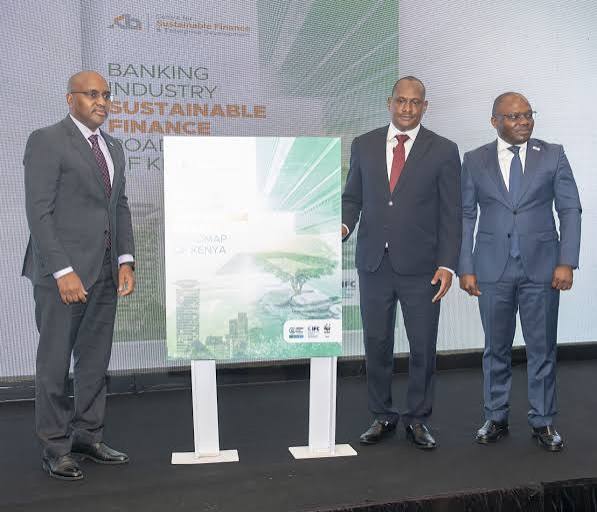
Kenya’s banking industry has launched a Sustainable Finance Roadmap to guide financial institutions in directing capital towards environmentally sustainable investments and strengthening their response to climate-related risks. The framework was unveiled on November 3, 2026, by the Kenya Bankers Association (KBA), in partnership with the International Finance Corporation (IFC) and WWF-Kenya.
The Banking Industry Sustainable Finance Roadmap provides guidance on integrating sustainability into banks’ governance structures, lending decisions, risk management, reporting and capital allocation. It is intended to help financial institutions identify climate and nature-related risks while expanding financing for projects that support sustainable economic development.
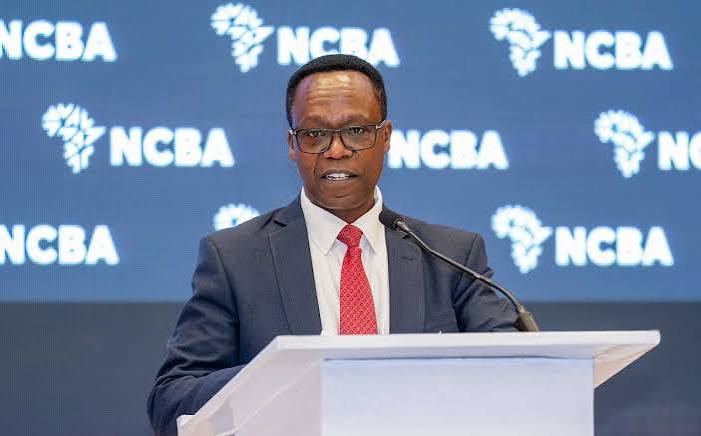
KBA Chairman Paul Russo said the framework would help the sector move from sustainability commitments to practical implementation. He said it would guide banks in directing funding towards green projects, managing environmental risks and strengthening sustainability practices.
The roadmap is also expected to improve access to finance for businesses, particularly micro, small and medium-sized enterprises (MSMEs), which often face challenges securing capital for expansion and investment. By incorporating sustainability considerations into lending, banks can support enterprises seeking to adopt cleaner production methods, improve resource efficiency and build resilience against climate-related disruptions.
KBA Chief Executive Officer Raimond Molenje said the framework brings together existing industry initiatives and provides a clearer pathway for accelerating sustainable finance adoption. He urged financial institutions to use the roadmap to strengthen financial services and value chains serving small-scale traders and businesses.
The initiative comes as Kenya faces increasing exposure to climate-related economic risks, including droughts, floods and disruptions to agricultural production. These challenges affect businesses, households and financial institutions through changes in income, asset values, loan repayment capacity and operating costs.
For banks, incorporating environmental and social considerations into lending decisions can help identify risks that traditional credit assessments may not fully capture. It can also create opportunities to finance renewable energy, climate-smart agriculture, sustainable infrastructure and other projects supporting the transition to a lower-carbon economy.
The roadmap does not automatically commit banks to specific lending amounts. Its impact will depend on how individual institutions translate the framework into internal policies, financing products and measurable targets.
KBA and its partners will now face the task of supporting implementation across the industry. Progress will be assessed through the extent to which sustainability considerations influence lending practices and increase financing for viable green investments.