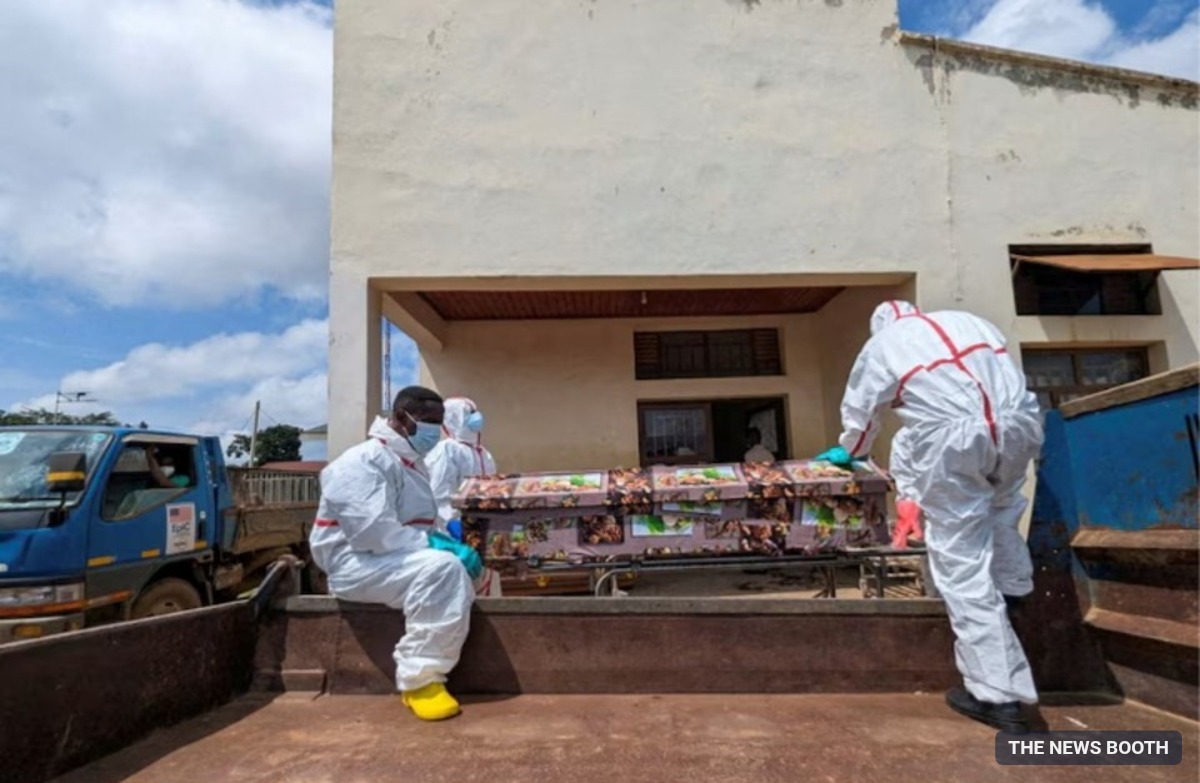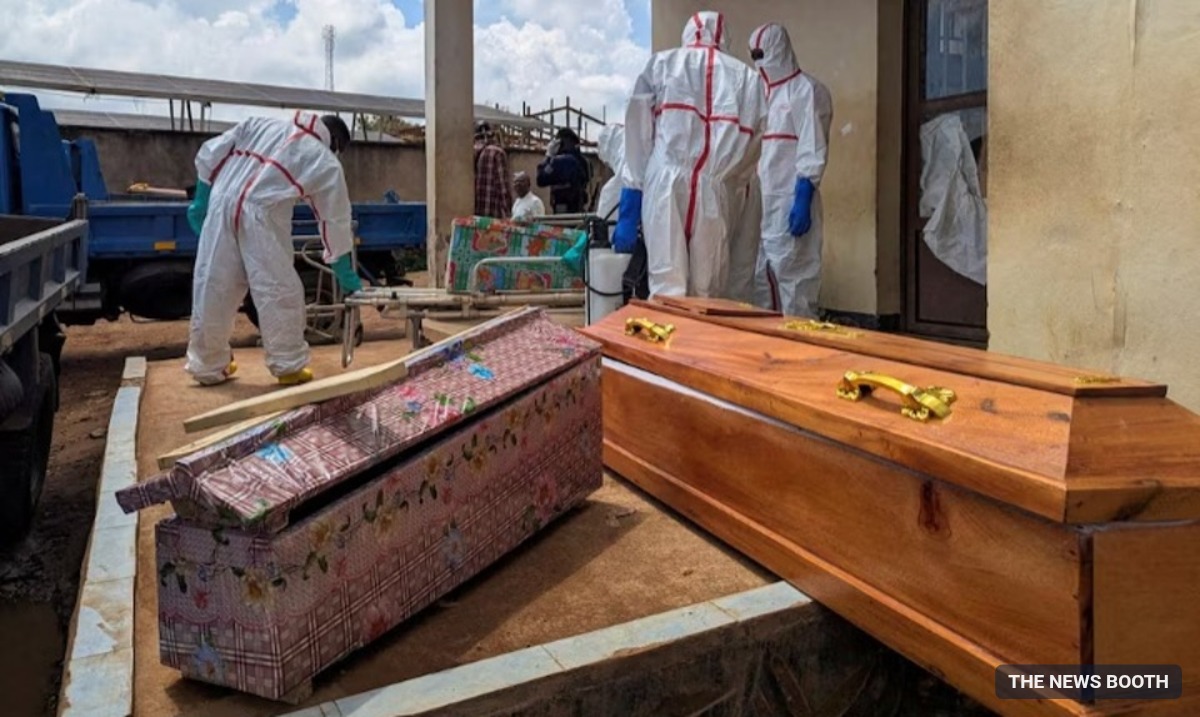
The Ebola outbreak in the Democratic Republic of Congo (DR Congo) has surpassed 12,000 confirmed infections, with nearly 6,000 people having died as health responders continue to struggle to contain the spread of the virus.
Government data released on Thursday, November 26, 2026, showed that confirmed infections had reached 12,021, while the death toll stood at 5,904.
The outbreak, which is the second-largest on record, has continued to spread despite ongoing response efforts, raising concerns over the ability of health authorities to bring the epidemic under control.
The current outbreak is caused by the Bundibugyo species of the Ebola virus, a rare strain for which there are currently no approved treatments or vaccines.
The outbreak was declared in mid-May in Ituri Province, northeastern DR Congo, but has since spread to eight of the country's 26 provinces.
Health responders have faced several challenges in containing the disease, including delayed detection of infections, ongoing conflict and strained health services.
These challenges have contributed to a faster spread of the virus compared to previous outbreaks, making it difficult for authorities to identify and isolate cases early enough.
According to data presented by the Africa Centres for Disease Control and Prevention (Africa CDC) earlier this month, only 15 per cent of new infections were linked to contacts already known to health authorities.
This means that many transmission chains are still being missed, making it harder for response teams to trace people who may have been exposed to the virus and prevent further infections.
The outbreak is now considered the second-largest and deadliest Ebola epidemic on record, behind the 2014–2016 West African outbreak, which recorded more than 28,600 infections and over 11,000 deaths.
The latest figures have also raised questions about the accuracy of the official death toll in some of the hardest-hit areas.
A Reuters analysis of satellite imagery found that the reported number of deaths could be significantly underestimated in two affected areas of DR Congo.
The findings point to the difficulties facing authorities as they attempt to track the full scale of the outbreak, particularly in areas where access to health services and reliable reporting remains a challenge.
With confirmed cases continuing to rise and many chains of transmission still unidentified, the outbreak remains uncontrolled, placing further pressure on health workers and response teams working to limit its spread.