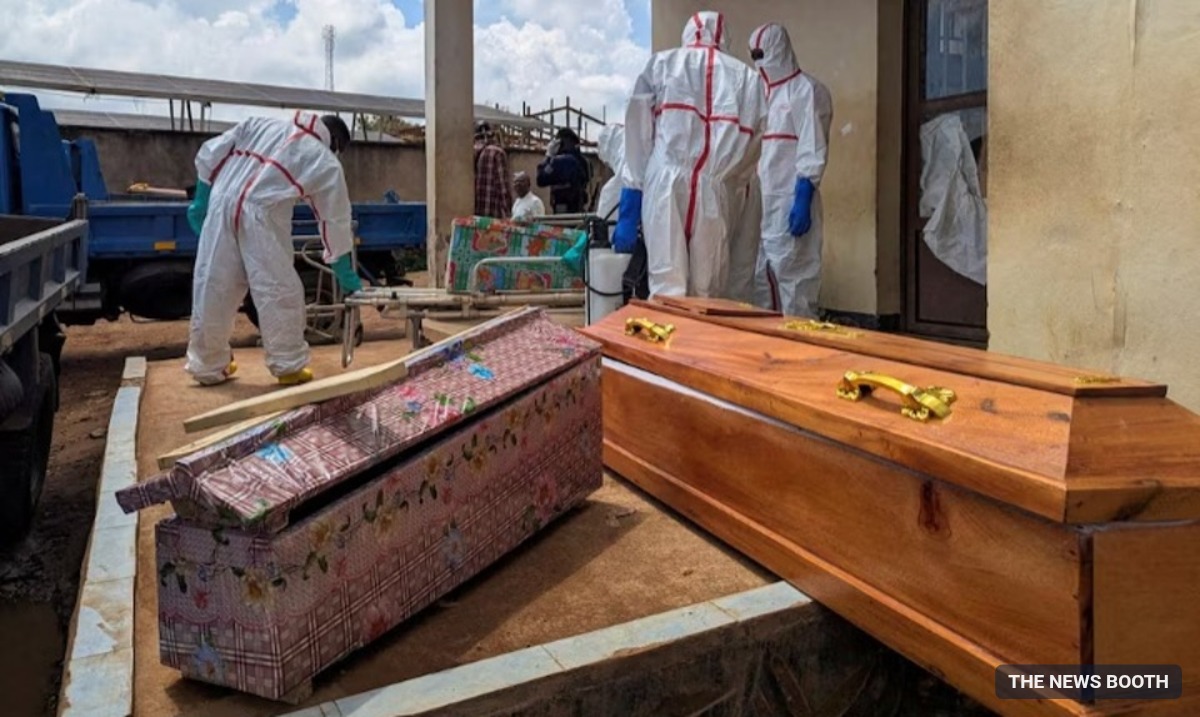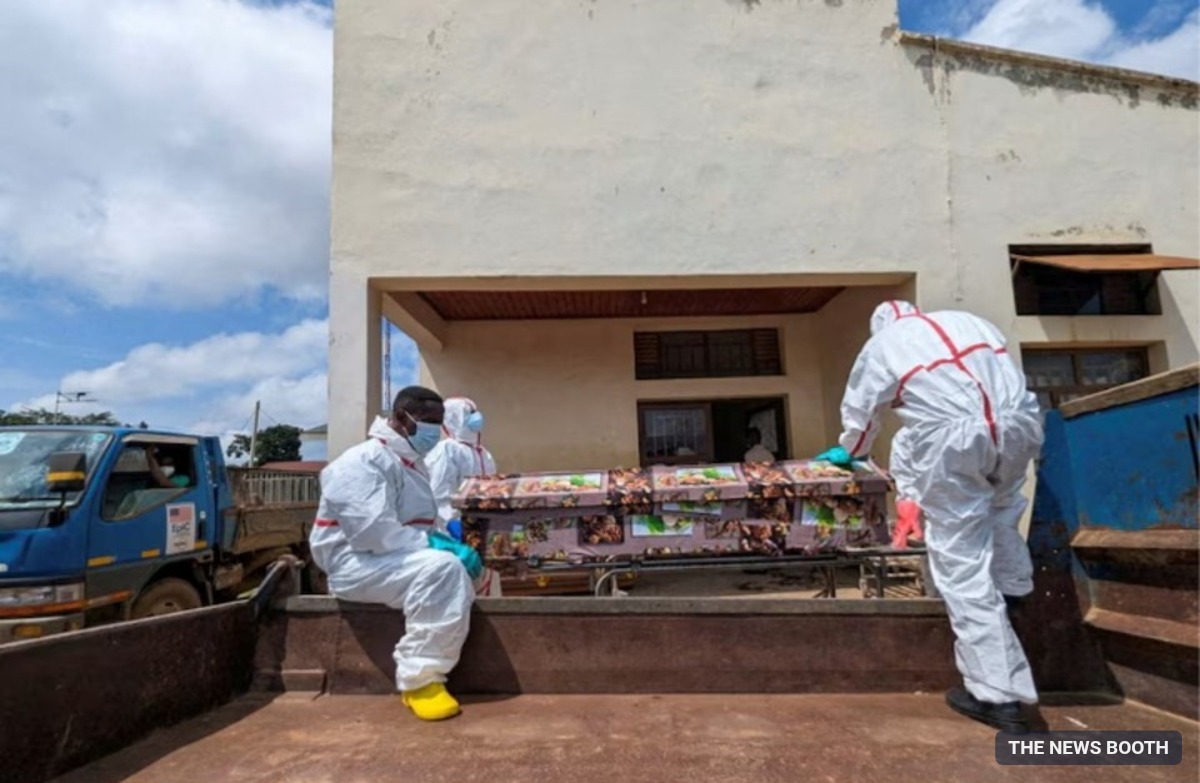
Families in Beni, eastern Democratic Republic of Congo (DR Congo), are raising concerns over the handling of bodies of people who have died during the ongoing Ebola outbreak, with some relatives saying they cannot locate their loved ones while others claim burials were conducted without their knowledge.
The concerns emerged after dozens of residents gathered outside the morgue at Beni's main hospital in North Kivu province, demanding answers over the whereabouts of bodies belonging to their relatives.
According to a Reuters report published on Wednesday, November 25, the families accused hospital and burial teams of failing to properly account for the deceased, leaving some relatives uncertain about where their loved ones were taken.
Hospital officials, burial teams and local authorities reportedly told the affected families that efforts were underway to trace the missing bodies. However, they did not respond to requests for comment.
One of the affected residents, Mathe Kasereka, said his family had gone to the morgue to collect the body of his 19-year-old brother for burial but was unable to find him.
Kasereka explained that the family had been asked to provide a coffin, which they purchased and delivered to the morgue.
He said staff initially helped other families collect their relatives' bodies before beginning a search for his younger brother, only to inform them that the body could not be located.
The family was later directed to return to the Ebola treatment centre where the teenager had died to establish whether his body had been left there.
However, staff at the facility reportedly informed them that records showed the body had already been transferred to the hospital morgue.
"We completed all the formalities that were required of us ... But up to now, we still have not found him," Kasereka said.
Another resident, Rosette Satondwa, said her brother-in-law had died at the hospital two days earlier, with the family planning to bury him on Tuesday.
She said they were instead informed that he had already been buried the previous day without their knowledge.
She added that relatives later sought to be shown the grave where their loved one had been buried, accompanied by his widow and children.
Richard Kasereka Mupanda, another relative of the missing teenager, said he had entered the morgue on Monday alongside Red Cross workers to search for the body but had still been unable to locate it.
He said the search had become difficult because some of the bodies kept at the morgue were beginning to decompose, raising further uncertainty over their identification.
During Ebola outbreaks, specialised burial teams, often supported by the Red Cross, handle the bodies of victims to reduce the risk of further infections. Families may be allowed to attend the burial and, in some cases, are asked to provide coffins.
The reported incidents have raised concerns about public confidence in health facilities and the teams responding to the outbreak. Health workers in the region have previously faced resistance from communities suspicious of the Ebola response.
Beni has recorded more new Ebola cases than any other area since the beginning of November, accounting for about a fifth of infections reported during that period, according to government data cited by Reuters.
The same data indicates that more than 1,000 people have been infected in the city and approximately 650 have died since the outbreak began in May.
The concerns come as health authorities continue efforts to contain the outbreak, with proper handling and identification of bodies remaining an important part of preventing further transmission.
For the affected families, however, the immediate concern remains finding their relatives and receiving clear information about what happened to them.