The African Union (AU) has called for an inclusive, Sudanese-led dialogue to resolve the conflict in Sudan following Ethiopia's proposal to host peace negotiations, amid opposition from Khartoum over Addis Ababa's suitability to mediate the crisis.
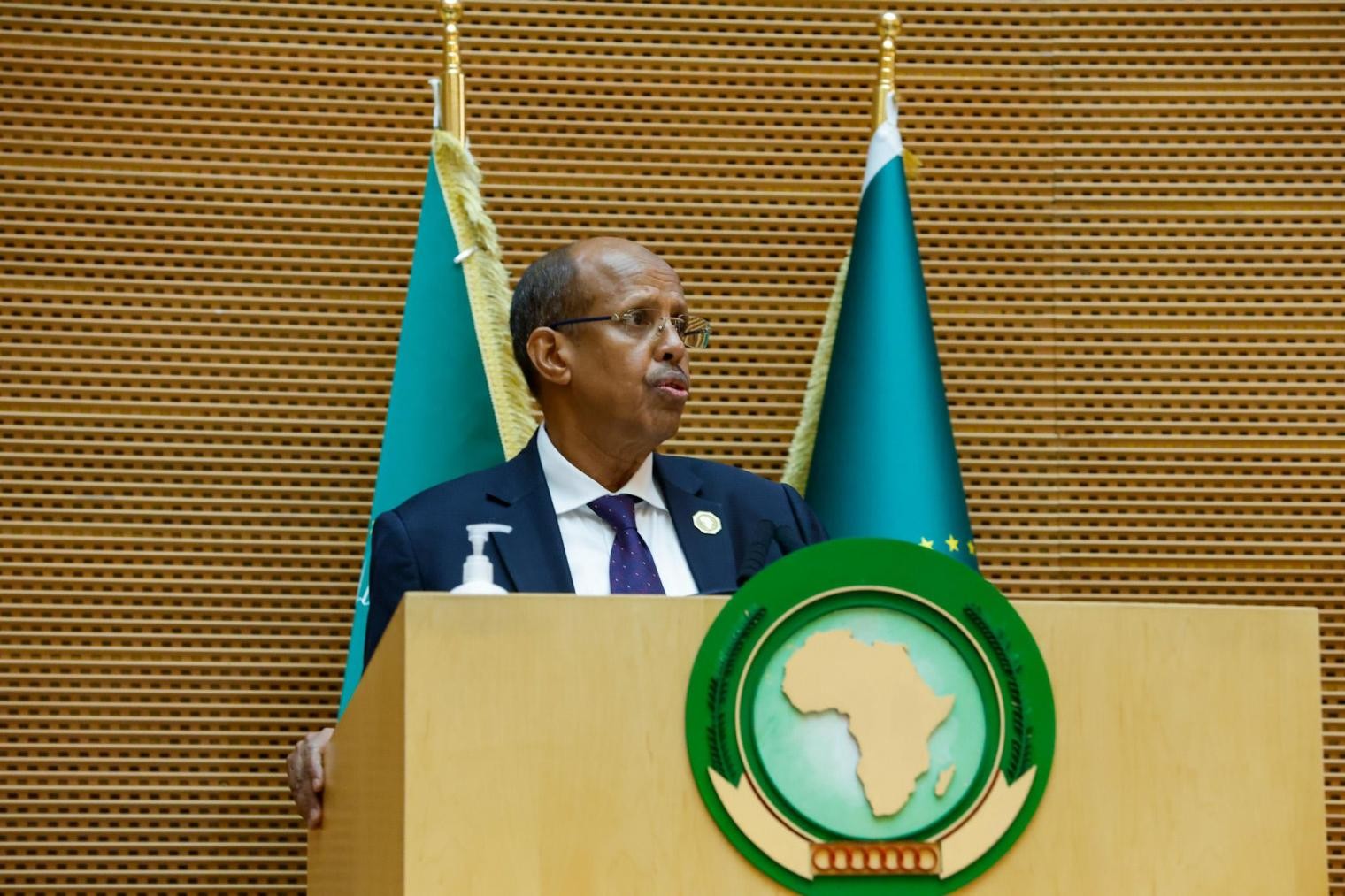
In a statement issued on Wednesday, November 25, African Union Commission Chairperson Mahmoud Ali Youssouf acknowledged Ethiopia's proposal to convene an intra-Sudanese dialogue and the position taken by Sudanese authorities regarding the initiative.
Youssouf said any process seeking to resolve the conflict must be inclusive, Sudanese-led and Sudanese-owned to ensure lasting peace while protecting the country's sovereignty, unity and territorial integrity.
He reiterated the AU's commitment to finding a peaceful resolution through dialogue and negotiations, in line with the principles of the bloc's Constitutive Act and other relevant instruments.
The Commission Chairperson also reaffirmed the AU's commitment to supporting efforts by Burundi President Évariste Ndayishimiye, who currently chairs the African Union, in advancing a peaceful and lasting resolution in collaboration with relevant regional and international partners.
The statement followed Ethiopia's announcement of an initiative to bring together Sudanese military, political and civilian groups for comprehensive talks aimed at ending the war.
Ethiopian Prime Minister Abiy Ahmed announced the proposal on Tuesday, November 24, inviting the different Sudanese stakeholders to participate in an open dialogue to be hosted and facilitated by Ethiopia.
Abiy said the initiative was intended to create an opportunity for Sudanese parties to resolve their differences, halt the fighting and establish a foundation for sustainable peace.
He maintained that Ethiopia was prepared to engage all sides on equal terms, insisting that Sudan's future should be determined by its people through an independent national process rather than externally imposed solutions.
However, Sudan's government rejected the proposal on Wednesday, questioning Ethiopia's neutrality and its ability to facilitate negotiations.
In a statement carried by the Sudan News Agency (SUNA), Khartoum accused Ethiopia of supporting the paramilitary Rapid Support Forces (RSF) and allowing drones to be launched from its territory to attack targets inside Sudan.
The government argued that neutrality and respect for Sudan's sovereignty were essential conditions for any country seeking to host or facilitate peace negotiations.
It called for an independent investigation into the allegations and urged the AU and other regional and international partners to exclude Ethiopia from arrangements to host or facilitate the proposed dialogue.
Khartoum further maintained that the Sudanese people should determine the venue, agenda and facilitator of any negotiations through consensus, describing national sovereignty and independent decision-making as non-negotiable.
Ethiopia has rejected allegations of supporting the RSF, while Abiy has maintained that his government's initiative is intended to provide an impartial platform for Sudanese stakeholders. The allegations against Ethiopia have not been independently established.
Despite the disagreement, the Ethiopian proposal received support from the Civil Democratic Alliance of the Forces of the Revolution (Sumoud), a civilian coalition associated with former Sudanese Prime Minister Abdalla Hamdok, and the RSF-led Tasis transitional administration.
The competing positions reflect the divisions among Sudanese political and military stakeholders over how negotiations should be organised and who should facilitate them.
The conflict began on April 15, 2023, following a power struggle between the Sudanese Armed Forces (SAF), led by General Abdel Fattah al-Burhan, and the RSF, commanded by Mohamed Hamdan Dagalo, popularly known as Hemedti.
The fighting has since spread across several parts of the country, triggering widespread displacement, destruction of infrastructure, food shortages and the collapse of essential services.
According to UNICEF's 2026 humanitarian mid-year report, approximately 33.7 million people in Sudan require humanitarian assistance, including 17.3 million children. The conflict has also displaced millions of people within Sudan and forced others to seek refuge in neighbouring countries.
The AU's latest statement does not designate Ethiopia as an approved mediator or announce an agreed framework for the proposed negotiations. Instead, it reiterates the bloc's position that any peace initiative must have the participation and ownership of Sudanese stakeholders.
The statement comes as regional and international efforts continue to seek an end to the fighting, with the AU maintaining its involvement alongside other partners in pursuing a negotiated settlement.