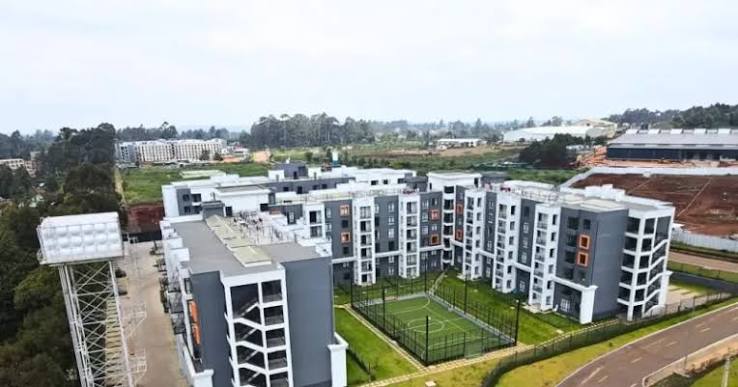
International Housing Solutions (IHS) Kenya has broken ground on a KSh1.2 billion green housing development in Karen End, Nairobi, as property developers respond to demand for professionally managed rental homes.
The project, named Muzi Tulivu, will comprise 210 apartments, including 90 one-bedroom and 120 two-bedroom units, targeting young professionals and smaller households seeking accommodation in the capital.
The development is expected to offer monthly rents ranging between KSh10,000 and KSh50,000, according to the project information provided by the developer.
IHS Kenya Managing Director Kioi Wambaa said the investment responds to demand for quality housing in an area benefiting from improved road infrastructure and growing residential development.
The project will incorporate green building features designed to improve resource efficiency and reduce the environmental footprint of residential construction.
An environmental and social impact assessment submitted to the National Environment Management Authority identifies the development as comprising 210 apartments designed around the IFC's EDGE green-building standards.
The project is expected to include solar water heating, rainwater management measures and wastewater treatment infrastructure, among other features.
Wambaa said developers continue to face challenges from volatile construction costs and inflation, which have increased the difficulty of delivering housing at prices affordable to ordinary households without compromising quality.
The KSh1.2 billion investment highlights the growing role of private developers and institutional investors in Kenya's rental housing market, where demand is being driven by urbanisation, changing household sizes and the cost of home ownership.
For tenants, the availability of professionally developed rental apartments could expand housing choices, particularly for young workers and smaller families who may not require large residential units.
However, the project's affordability will ultimately depend on the final rents, service charges, location and household incomes. The advertised rental range also covers a broad price bracket, meaning the development will serve households with different purchasing power.
The development adds to investment in Nairobi's residential property market, where the challenge remains balancing construction costs, investor returns and the need for housing that working households can afford.