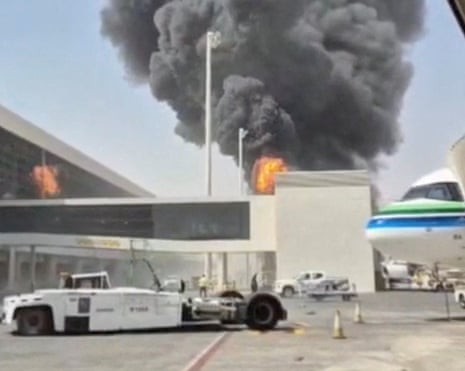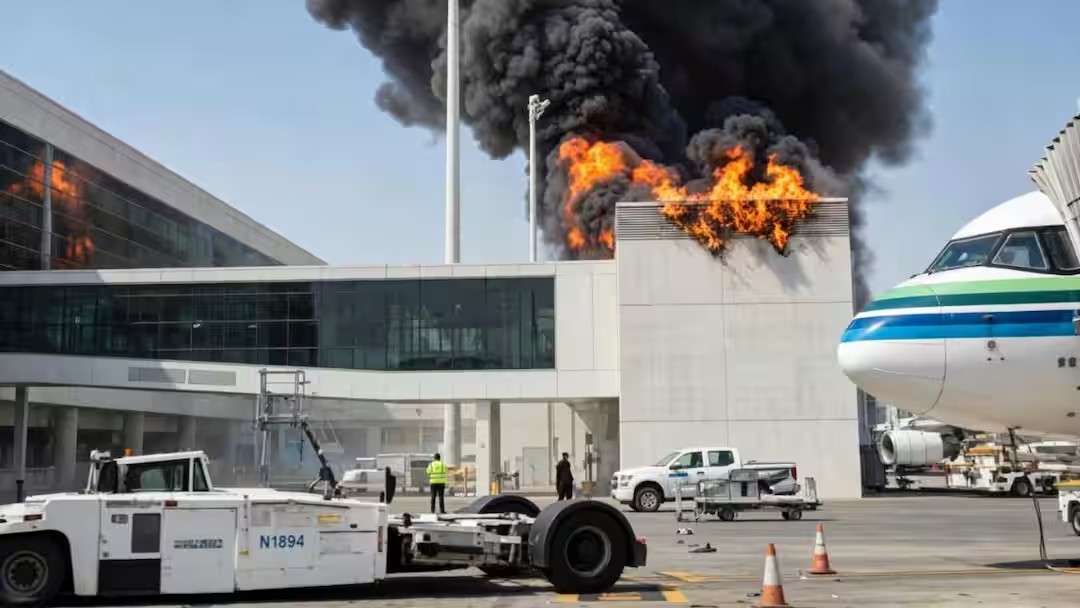
One person was killed and 11 others injured in a fresh attack on King Khalid International Airport in Riyadh, Saudi Arabia, on Sunday, October 11, as authorities dealt with the aftermath of a deadly strike a day earlier.
Saudi Arabia's General Authority of Civil Aviation identified the person killed in Sunday's attack as a Pakistani resident. The incident marked another escalation in attacks targeting the kingdom's aviation infrastructure, raising concerns over the safety of civilian airports and passengers.
The Saudi-led coalition fighting the Houthis in Yemen reported that a projectile struck the airport's terminal complex, sparking a fire. The coalition also said its air defences intercepted a missile near the facility.
The Iran-backed Houthi group claimed responsibility for attacks targeting Saudi infrastructure and threatened further strikes against the kingdom's transport hubs. The group warned that airports could remain targets as hostilities between the two sides intensified.
Sunday's attack followed a deadly strike on Saturday that initially killed 12 people and injured 309 others, according to Saudi aviation authorities. The death toll later rose to 13 after India's embassy in Saudi Arabia confirmed that one of its citizens had died from injuries sustained in the attack.
The repeated strikes forced authorities to suspend operations at King Khalid International Airport, disrupting flights serving the Saudi capital. Reports published on Monday indicated that operations remained suspended as officials assessed the situation and reviewed safety conditions. Travellers faced uncertainty over when normal services would resume.
The violence has also raised concerns about attacks on other critical facilities. The Houthis claimed to have targeted Dammam airport in eastern Saudi Arabia, while the Saudi-led coalition reported intercepting a drone in the eastern region. The coalition also said it had destroyed a ballistic missile heading towards Khamis Mushait in southern Saudi Arabia.
The attacks prompted condemnation from regional governments and international leaders. Saudi Arabia, Pakistan, Turkey and Egypt jointly denounced the strikes, warning that the escalation threatened regional and international security. The countries called for an immediate halt to the attacks.
US President Donald Trump said Washington was considering whether to join Saudi Arabia's military campaign against the Houthis, although no decision to intervene had been announced in the reports reviewed. Iranian Foreign Minister Abbas Araghchi, meanwhile, called for a political solution and offered Tehran's assistance in facilitating dialogue between Saudi Arabia and Yemen.
Saudi Arabia has supported Yemen's internationally recognised government militarily since 2015 in its conflict with the Houthis, who control the capital, Sanaa, and other parts of the country.
The renewed violence comes amid fighting around the Bab al-Mandab Strait, a strategic shipping passage connecting the Red Sea to the Gulf of Aden. Further escalation could threaten commercial shipping and deepen instability across the region.
With repeated attacks disrupting aviation and threatening other infrastructure, Saudi authorities face the challenge of restoring safe airport operations while preventing the conflict from widening.