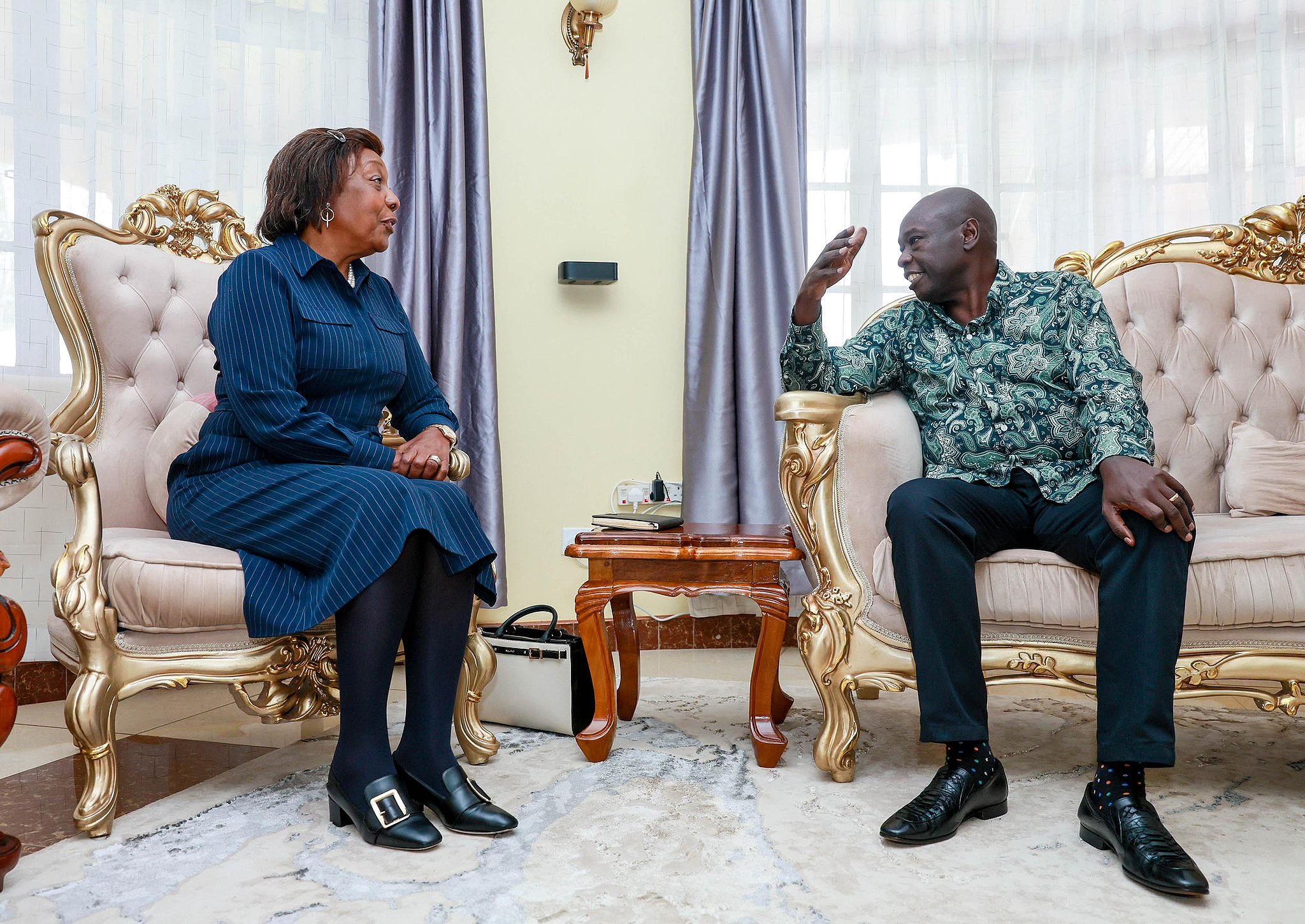
Former Deputy President Rigathi Gachagua has held talks with veteran politician Charity Ngilu at his Wamunyoro residence, seeking insights from the formation of the National Rainbow Coalition (NARC), which ended KANU's long stay in power in the 2002 General Election.
In a statement following the meeting on Tuesday, November 3, Gachagua described Ngilu as the “Iron Lady of Kenyan politics” and credited her with playing a central role in bringing together opposition leaders who challenged KANU's dominance.
He said the former Kitui Governor took him through the negotiations, political strategy and decisions that shaped the NARC coalition, which brought together several opposition groups behind the late President Mwai Kibaki.
Gachagua noted that Ngilu worked alongside Kibaki and the late Kijana Wamalwa in developing the political strategy that united different leaders and formations ahead of the 2002 elections.
He said the discussion had given him valuable lessons on how political alliances are built, organised and sustained, adding that the experience would inform his current political engagements.
The former Deputy President also said the conversation touched on the need to confront corruption and impunity, which he identified as major obstacles to the country's progress.
According to Gachagua, the insights shared by Ngilu had strengthened his understanding of what would be required to bring about political change and steer the country towards prosperity.
He expressed confidence that the lessons from the NARC experience would be useful in shaping the direction of the opposition's current political engagements.
Gachagua further drew parallels between the political situation ahead of the 2027 General Election and the events that preceded the 2002 polls, describing the present period as another defining moment for the country.
He said the opposition intended to settle on one presidential candidate rather than allow competing ambitions to divide its support.
The statement signals Gachagua's continued emphasis on opposition unity as political leaders hold consultations ahead of the next General Election. His remarks also place the experience of veteran politicians such as Ngilu at the centre of discussions on how to build a broad political alliance.
The 2002 NARC coalition emerged after years of opposition divisions, bringing together different political parties and leaders behind Kibaki's presidential bid. The alliance went on to defeat KANU's candidate, Uhuru Kenyatta, ending the party's 24-year rule.
However, the coalition later experienced internal disagreements over political arrangements and the implementation of pre-election agreements, highlighting the challenges that can arise when different groups come together under one political platform.
Ngilu's experience in that political period gives her a significant role in discussions about coalition-building, negotiations and the compromises needed to unite parties with different interests.
Gachagua's meeting with her comes as opposition figures continue exploring possible cooperation arrangements, with the question of a common presidential candidate remaining central to the unity debate.