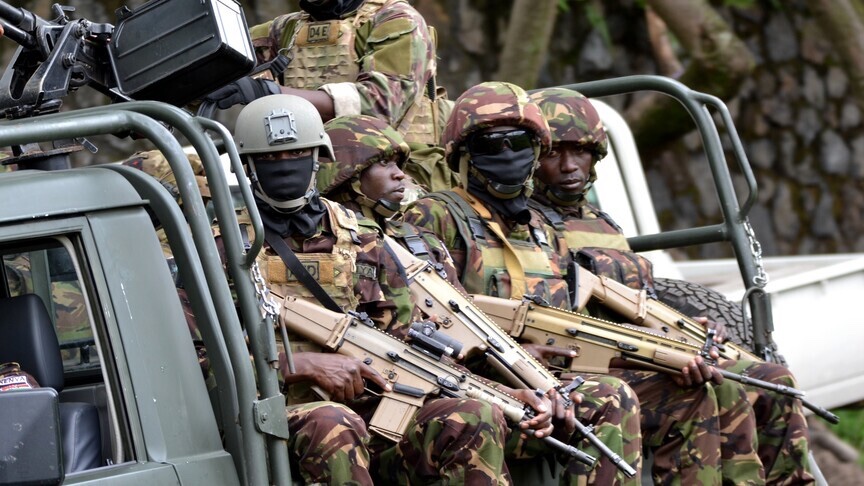
A military court in the Democratic Republic of Congo (DR Congo) has sentenced 66 soldiers to death for cowardice, mutiny and disobeying orders after they allegedly abandoned their positions during clashes with rebel fighters in the country’s eastern region.
The verdict was delivered late on Friday, November 6, 2026, by the Goma Garrison Military Court, which was sitting in Walikale, North Kivu Province, following a 12-day trial involving 71 soldiers.
Four soldiers were acquitted, while a sergeant was sentenced to 10 years in prison after the court considered substantial mitigating circumstances.
According to a statement from the army’s 34th Military Region, the soldiers belonged to the 3415th Regiment and had been arrested on October 20, 2026, in Ngora village over incidents in Ntonto, within Walikale territory.
They faced charges of cowardice, military mutiny and refusing to obey orders after allegedly abandoning their positions during confrontations with fighters from the Front for the Refoundation of the Nation (FRN), a rebel coalition that includes the M23 group.
The military authorities said the proceedings were intended to strengthen discipline within the armed forces as government troops continue operations against armed groups in eastern DR Congo.
The latest convictions come as the Congolese army struggles to contain rebel advances across North and South Kivu, with repeated battlefield setbacks exposing weaknesses in its command structures and military organisation.
A report by French broadcaster Radio France Internationale (RFI) highlighted the wider scale of the military prosecutions, with at least 507 soldiers convicted since the beginning of 2025. Of these, 381 received death sentences, reflecting an increasingly tough approach by military courts towards personnel accused of abandoning their duties.
The latest ruling also follows the sentencing of another 27 soldiers to death last month for allegedly withdrawing from frontline positions during clashes with rebel forces.
However, the military’s disciplinary measures have drawn attention to longstanding challenges within the armed forces, including poor organisation, inadequate equipment and complaints by soldiers over low pay and delayed allowances.
These difficulties have complicated government efforts to fight armed groups, particularly the M23 rebellion, which has continued to challenge the authority of President Félix Tshisekedi’s administration in the eastern provinces.
Kinshasa has repeatedly accused neighbouring Rwanda of providing support to M23, allegations that the Rwandan government and the rebel group have denied.
DR Congo’s decision to impose death sentences on military personnel follows the government’s March 2024 move to lift a 20-year moratorium on capital punishment.
Authorities said the decision was necessary to deal with alleged traitors within the armed forces and announced that the death penalty would also apply to offences involving armed groups, insurrection, treason and war crimes.
The reinstatement attracted criticism from human rights organisations, which raised concerns about the use of capital punishment and its implications for human rights and judicial protections.
Despite the resumption of death sentences, no formal executions have been carried out since the moratorium was lifted.
The military trials have also extended to the country’s political leadership. In October 2025, former Congolese President Joseph Kabila was sentenced to death in absentia over charges including treason and war crimes. He denied the accusations and did not appear in court to defend himself. He has since been named as the leader of the FRN coalition.
The latest verdict adds to growing pressure on the Congolese military to address indiscipline within its ranks as fighting continues in the east, with the effectiveness of increasingly severe punishments remaining a major question.