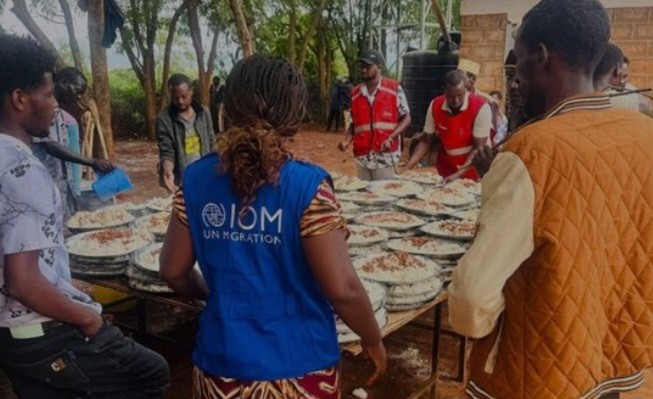
Thousands of people who fled violent clashes in neighbouring Ethiopia and crossed into Kenya are facing shortages of food, clean drinking water and shelter, prompting humanitarian agencies to call for urgent funding to support the displaced families.
The International Organization for Migration (IOM) says approximately 50,000 people have crossed the border into the Moyale region of northern Kenya since late October as they seek safety from the violence.
The new arrivals are struggling to access basic necessities, while the communities hosting them are also coming under pressure due to limited resources.
IOM Kenya Chief of Mission Nomagugu Ncube said the situation had created an urgent need for humanitarian assistance, particularly food, water and decent shelter.
“Families who fled are facing serious shortages of food, water and adequate shelter, while communities hosting them are already facing limited resources,” Ncube said.
A rapid assessment involving 758 households, conducted by Kenyan authorities with support from IOM, other United Nations agencies and non-governmental organisations, revealed the extent of the needs among the displaced population.
The findings showed that 71 per cent of the households did not have enough food, with 80 per cent identifying food as their most urgent requirement.
Access to clean water and sanitation has also emerged as a major challenge. About 44 per cent of the households reported inadequate access to drinking water, while more than three-quarters said they did not have access to handwashing facilities.
Healthcare is another concern, with more than half of the households reporting difficulties accessing medical services. The assessment attributed the challenges mainly to the high cost of treatment and shortages of medicines.
Most of the displaced families are currently staying with relatives or members of the host communities in Moyale, increasing demand for essential supplies and putting additional pressure on households already living with limited resources.
Others have sought refuge in schools and temporary settlements, while some families have been forced to sleep in the open due to a lack of adequate accommodation.
The assessment further established that 96 per cent of the households surveyed had fled mainly from Ethiopia’s Oromia and Somali regions.
The scale of the displacement is also reflected in reports that nine out of every 10 people surveyed said their entire villages had fled, suggesting that the violence has forced communities to leave their homes in large numbers.
Children account for more than half of those arriving in Kenya, including many below the age of five. IOM has raised concerns over their health and wellbeing as they face worsening living conditions and limited access to essential services.
The organisation and its humanitarian partners are appealing for additional funding to provide food, safe drinking water, shelter, sanitation facilities and healthcare to the displaced families.
The agencies say assistance is also needed for host communities, which continue to accommodate the new arrivals despite facing their own resource constraints.
With thousands of people continuing to depend on support in Moyale, humanitarian agencies warn that urgent assistance is needed to address the growing needs and prevent living conditions from deteriorating further.