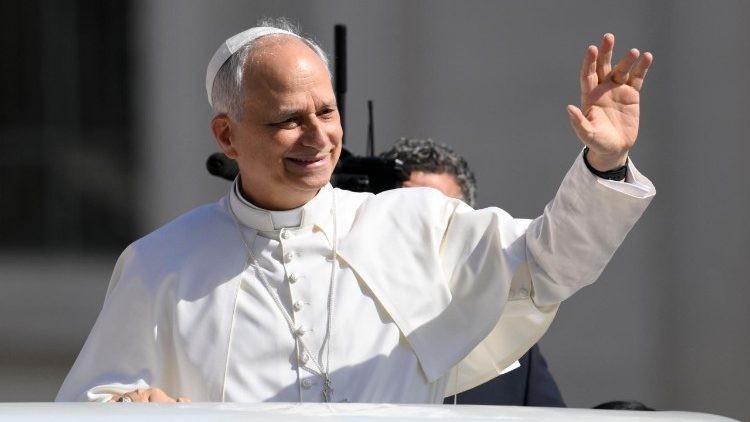
Pope Leo XIV has warned that artificial intelligence (AI) and unregulated automation pose a serious threat to employment opportunities and human development, calling for technology to be guided by ethical principles that protect human dignity.
In a statement shared on his X account, the Pope cautioned that the growing influence of artificial intelligence in workplaces could put countless jobs at risk if technological advancement is not accompanied by adequate safeguards for workers.
He stressed that technology must always remain subject to ethical considerations, arguing that algorithms cannot replace human judgement, discernment or the intrinsic value of workers.
Pope Leo XIV said access to employment opportunities for all should remain a key priority in public policies and economic processes.
He maintained that the availability of decent work should be one of the standards used to evaluate the human quality of any development model, rather than measuring progress solely through economic growth and financial performance.
The Pope also challenged business leaders to reconsider economic models that place profit above human welfare, warning that businesses risk becoming dehumanised when financial returns become their only measure of success.
According to him, an economy driven exclusively by profit can create structures that promote exclusion and undermine the dignity of workers, particularly those who are already vulnerable.
He called on business leaders to challenge this approach through ethical investment practices that prioritise the dignity of work, social responsibility and environmental sustainability.
Pope Leo XIV further argued that financial success should not be assessed only through profits and business expansion but also through the contribution companies make towards the common good.
The Catholic leader also raised concerns about development models that improve the wellbeing of certain groups while damaging the environment and shifting the consequences onto disadvantaged communities.
He warned that genuine progress cannot be achieved by compromising ecosystems, worsening the living conditions of vulnerable populations or leaving future generations to bear the cost of today's economic decisions.
His remarks highlight the growing debate surrounding the ethical use of artificial intelligence, particularly as businesses increasingly adopt automated systems to improve efficiency and reduce operational costs.
As AI continues to transform industries and workplaces, concerns have intensified over job displacement, workers' rights and the need to ensure that technological innovation benefits society as a whole.
Pope Leo XIV's message calls for a development approach that puts people before profits, insisting that economic and technological progress must ultimately serve humanity rather than undermine its dignity.