Kenya’s decision to award the Mrima Hill rare earths and niobium project to an American consortium has received backing from the United States government, which says the investment could boost Kenya’s mining sector, create jobs and strengthen economic ties between the two countries.
The US State Department’s Africa Bureau congratulated Frontier Minerals on its selection to develop the mineral-rich deposit in Kwale County, saying the choice of an American consortium reflected the Kenyan government’s commitment to transparency in the mining sector.
In a statement posted on X, the bureau said the project would bring market-leading innovation to Kenya while ensuring local value addition, job creation and economic benefits for both countries.
The consortium, known as Frontier Minerals Consortium, comprises Frontier Minerals LLC, Bunker Hill Mining Corporation, ReElement Technologies and American Resources Corporation.
The Kenyan government announced the selection following a competitive tendering process for the development of the strategic mineral deposit, which is expected to attract significant investment into the country’s mining industry.
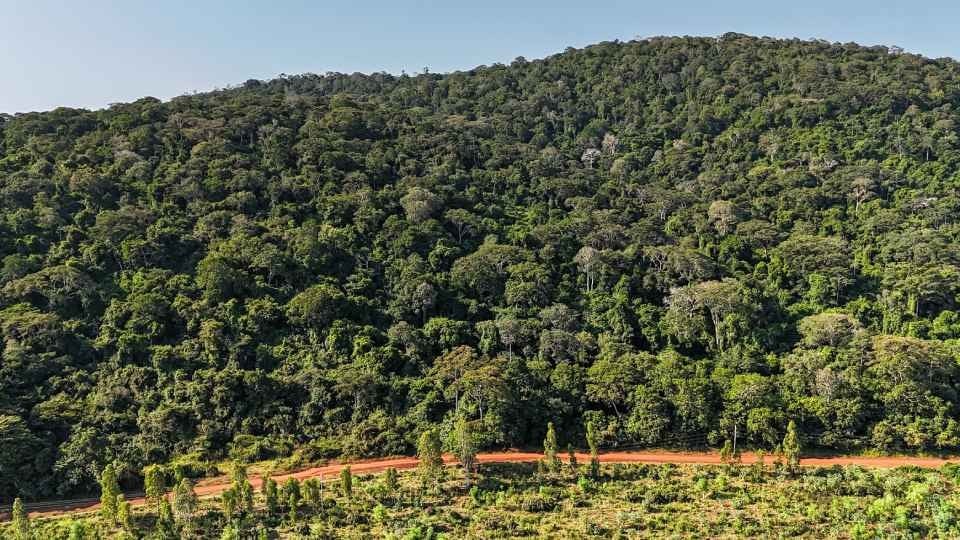
Mrima Hill is located in Kwale County, approximately 65 kilometres southwest of Mombasa.
The mineral deposit was first discovered by Kenya’s Mines and Geological Department in the 1930s, with further exploration undertaken in the 1950s in collaboration with Anglo American Corporation.
Exploration activities included more than 9,000 metres of test shafts and over 3,000 metres of drilling, helping establish the geological characteristics of the deposit.
The area is estimated to cover approximately 31.9 square kilometres and contains niobium and rare earth elements, minerals considered strategic because of their applications in modern technology, manufacturing and energy industries.
Geological assessments have identified minerals including niobium, yttrium, thorium, strontium and lanthanum at the site.
The deposit has attracted international interest because of its potential to supply minerals used in high-strength magnets, advanced electronics, aerospace manufacturing, electric vehicles and renewable energy technologies.
Mrima Hill is also a culturally significant site for the Digo community and other Mijikenda groups, who regard parts of the forest as sacred and use it for traditional practices and ancestral worship.
The proposed mining project has previously faced opposition from residents and environmental activists concerned about the potential destruction of the forest, ancestral sites, medicinal plants and local livelihoods.
Community members have also raised questions about compensation, land rights, environmental protection and whether they will benefit directly from the development.
The government has emphasised that the selection of Frontier Minerals is a notice of intention to award and does not constitute a mining licence. The consortium is expected to engage local communities, obtain the necessary consents and secure the required licences before proceeding with exploration.
The project is expected to face scrutiny over how the government balances the economic potential of the mineral deposits with environmental conservation and the protection of cultural heritage.
The selection of an American consortium also places Mrima Hill at the centre of growing global competition for critical minerals, as major economies seek to diversify supply chains for resources traditionally dominated by China.