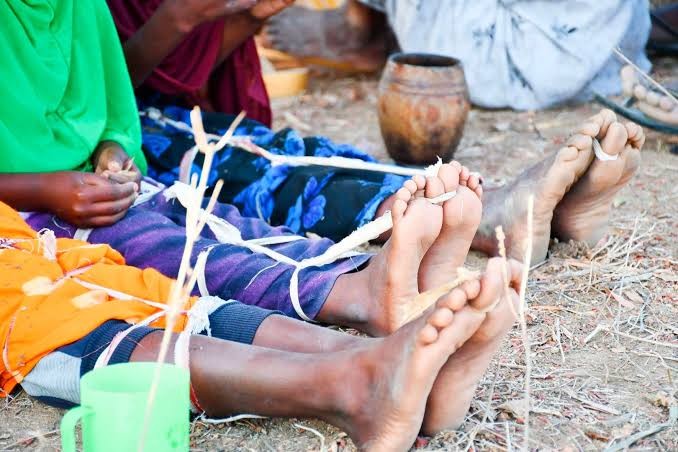
Female Genital Mutilation (FGM) remains a major concern in the Gusii region, with new statistics indicating that the harmful cultural practice continues to affect a significant number of girls and women in Kisii and Nyamira counties despite sustained campaigns to eradicate it.
The Director of the State Department for Gender in Kisii County, Winnie Koech, has raised concern over the persistently high prevalence of FGM, calling for renewed community efforts to protect girls from the practice.
Speaking at Ragogo in Kitutu Chache North during the graduation of 100 girls who underwent Alternative Rites of Passage (ARP) training this year, Koech revealed that FGM prevalence stands at 77 per cent in Kisii County and 74 per cent in neighbouring Nyamira County.
She described the figures as worrying, noting that they point to the continued challenges facing organisations and government agencies working to eliminate FGM in the region.
Koech attributed the persistence of the practice partly to the increasing medicalisation of FGM, where the procedure is reportedly carried out by medical personnel or individuals with medical training.
She warned that the shift towards medicalised FGM, coupled with the secrecy surrounding the practice, was making it increasingly difficult for authorities and stakeholders to identify cases and enforce efforts aimed at ending it.
The gender official urged parents, community leaders and other stakeholders to strengthen their involvement in the fight against FGM and other forms of gender-based violence.
She emphasised the importance of collective responsibility in changing harmful cultural attitudes and ensuring that girls are protected from practices that threaten their health, dignity and future opportunities.
Meanwhile, Gentrix Nyamongo, a board member of CECOME Group Kisii, which sponsored the Alternative Rites of Passage training, cautioned parents against pressuring girls who had completed the programme to undergo FGM.
Nyamongo warned that some families could undermine the gains made through alternative initiation programmes by encouraging, persuading or luring girls back into the harmful cultural practice.
She maintained that the training had equipped the 100 graduates with important knowledge, values and life skills to guide them as they transition into adulthood without undergoing FGM.
She urged parents and guardians to support the girls and respect their decision to embrace alternative rites of passage, rather than exposing them to pressure from families or members of the community.
Alternative Rites of Passage programmes have increasingly been embraced as a community-based approach to preserving positive cultural values associated with traditional initiation while eliminating FGM.
The programmes educate girls on personal development, reproductive health, life skills and their rights, providing an alternative pathway into adulthood without subjecting them to harmful procedures.
The latest concerns highlight the need for continued collaboration between government agencies, community organisations, parents and local leaders to accelerate the fight against FGM in Kisii and Nyamira counties.